


NIGHTSTAND
Books We Recommend

ROMAN JOURNEY 1786-1788 by Johann Wolfgang Goethe
Intra Moenia Edition, 2024, $14
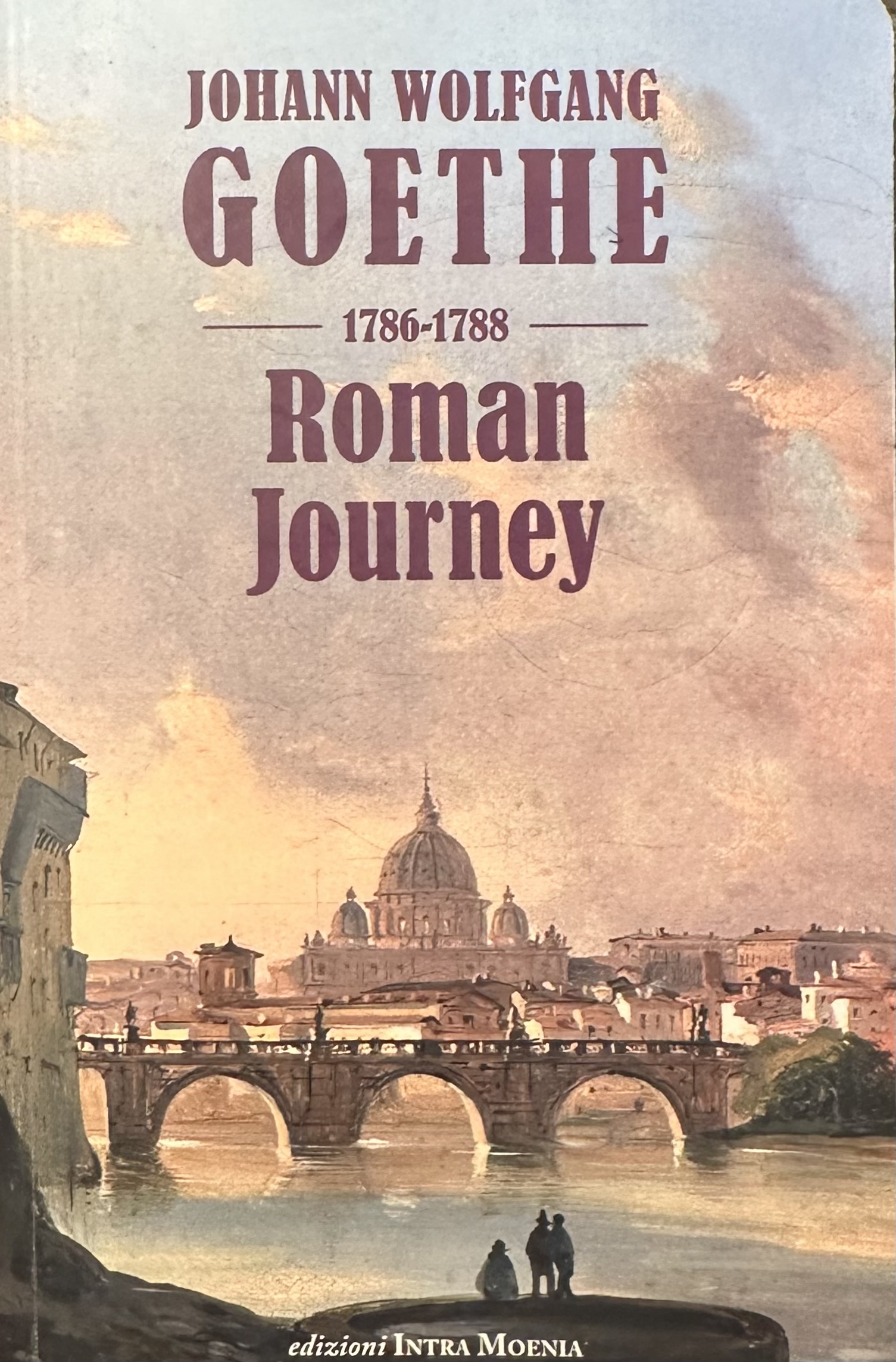 Goethe was world famous when he decided to spend time in Italy. Though he called himself an old man in his letters, he was thirty-seven in 1786, having published The Sorrows of Young Werther twelve years earlier. The short novel helped initiate the Romantic Period and sent more than one impressionable young man to his suicide, in imitation of the lovelorn Werther who attentions were spurned by the married woman he was obsessed with. As an aside, the book was inspired by Goethe’s similar IRL married love interest.
Goethe’s time in Rome stirred his soul (and his loins), though in these letters he tactfully omits any mention of romantic entanglement. He said, “I have never returned to such a high state of mind, nor to such happiness of feeling. In comparison with my state of mind when I was in Rome, I have never been happier since.” (In conversation with J.P. Eckermann, October 9, 1828.) Goethe’s quill describes his attempts at drawing and painting (he was disappointed with his progress), the goings on during steamy summer days and nights, his artist friends, and his many painting and church visits. He strolled the streets like any anonymous tourist soaking in the vibe and splendidness of the city, until his incognito identity was found out, and he was flooded with unwanted invitations and visitors.
Goethe lived near Piazza del Popolo, the huge piazza with Baroque twin churches that greeted visitors when they entered the main city gate. The twin churches are still there, as is much of eternal Rome. Goethe’s apartment is still there—the house museum Casa di Goethe—a primo location both then and now.
~ Helen Mitsios
THE OUTSIDER A Personal Odyssey Into the Essence of Cancer by David William Rasnick, PhD
Credos, 2026, $24.95
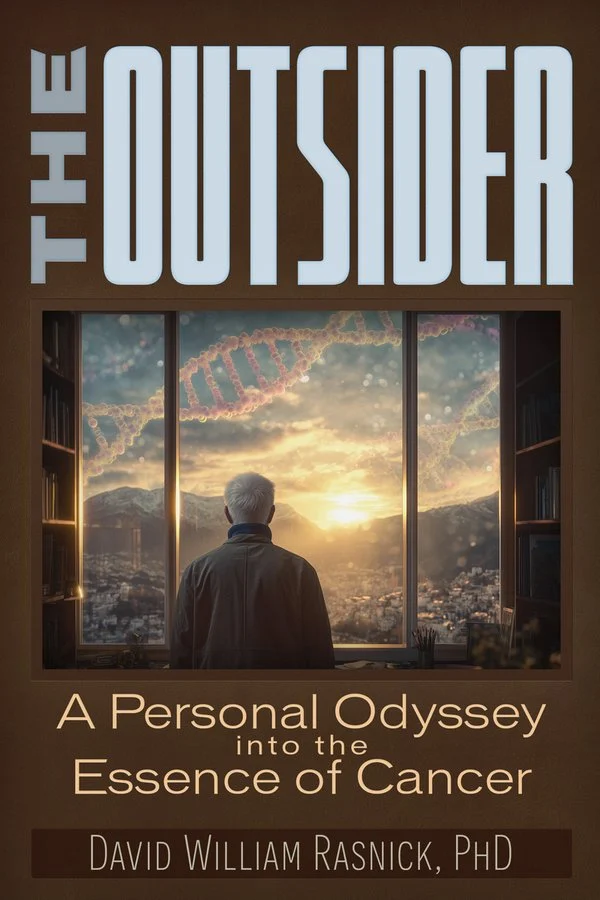 This engaging, often frightening book, written in layman’s terms, is principally about cancer and secondly about being a dissident. And the reality is that with medical science, if you are not with the conventional wisdom, you are against it and, with too much invested in it and the scale of profits being made from what has become so institutionalized, you will be ostracized, shunned and, at the very least, marginalized.
Rasnick holds a PhD in chemistry, so he knows what he’s talking about. He’s about a hundred years too late to be a pioneer in the theory that cancer is caused by unbalanced chromosomes — that originated with German scientist Theodor Boveri in 1914, who postulated that unbalanced chromosomes disrupted normal cells, making them cancer cells. The first world war put that on the back burner and Boveri died in 1915. But Rasnick is right on time with helping resurrect and championing the line of research, now widely felt to be credible though not, as you’d expect, embraced by the drug companies making the inescapably toxic medicine they currently peddle to fight the genes believed to be the cause.
Perhaps one day this will be a historic book. I don’t know what causes or can defeat cancer, but I know intelligent, sensible debate is always helpful, and invariably progresses learning. Unfortunately, we do not live in the ideal times of Platonic debate and respect for other ways of looking at a problem until it becomes as economically viable as the thinking it replaces.
~ Bob Guccione, Jr.
Visitations by Julia Alvarez
Alfred A. Knopf, 2026, $27
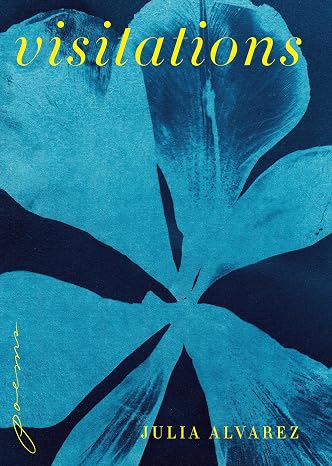 Julia Alvarez has always dwelled in the interstitial space between America and the Dominican Republic. She is known for her novels, poetry, non-fiction and children’s books, in which she captures her journey of assimilation with its varying degrees of success over a lifetime.
Throughout her writing, we come to know Julia’s colorful family members that include her aunt and three sisters, as she tries to individuate, but can’t quite manage to escape her place in the magnet of family hierarchy. This theme is witnessed again in Visitations, her first poetry collection in over twenty years, that time travels to various periods of her life. Some of the strongest poems address her later years. In “I Go Through the House, Turning Off the Lights,” Weybridge, Vermont, December 2024, the narrator wanders through the house turning off lights after a party and heads “… down the hall past the alcove with photos, / loved ones departed, parents, friends, / a container with the ashes of the sister/ who could not bear to go on walls lined / with books, bulwarks against the despair / that keeps me awake…
Alvarez alchemizes the ordinary, turning the days of a life into something valuable and extraordinary, which, when you think about it, they are.
~ Helen Mitsios


