


WITHOUT MAPS
Menorca, the island that keeps surprising me, and why you should know about it
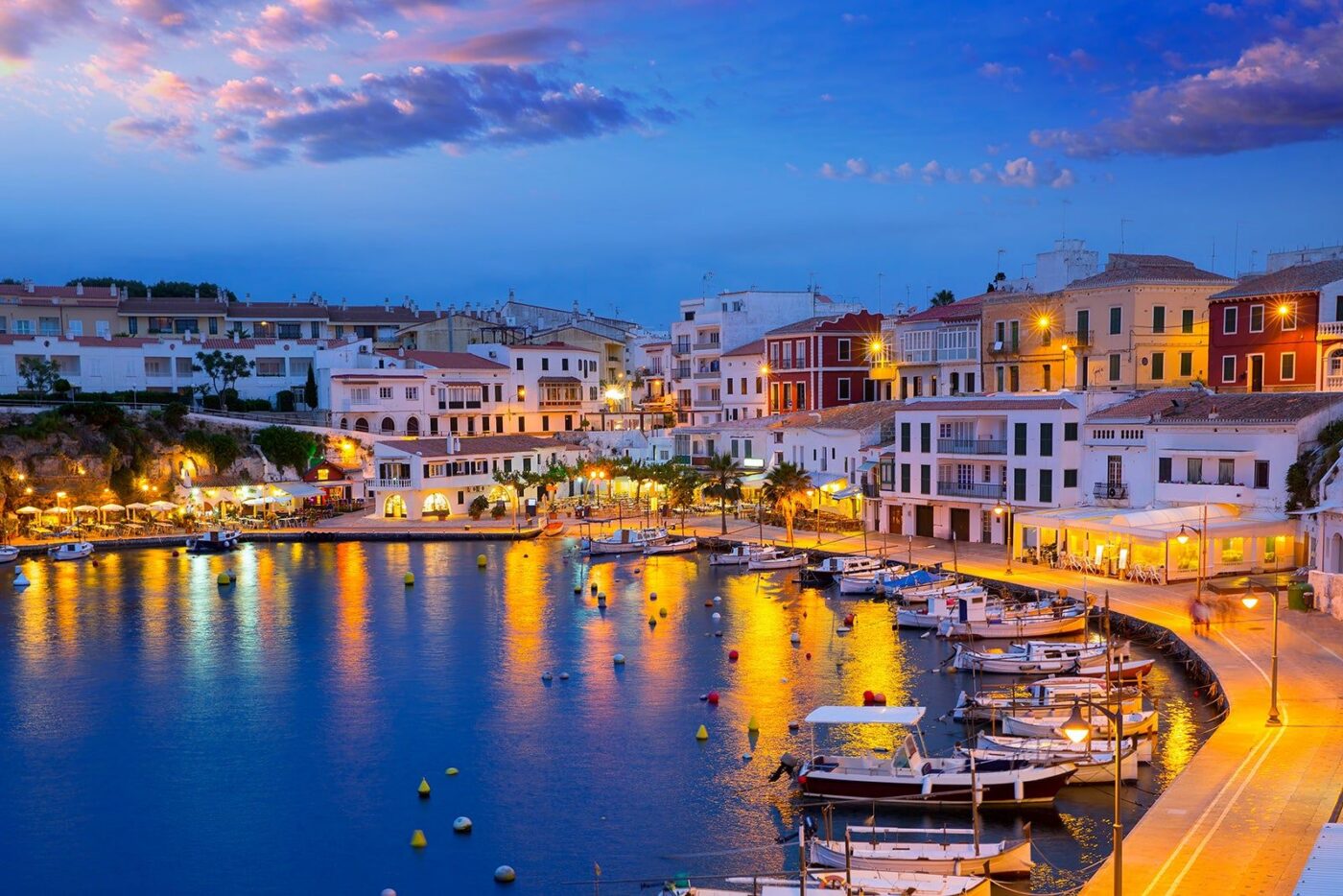
I’m going back to Menorca.
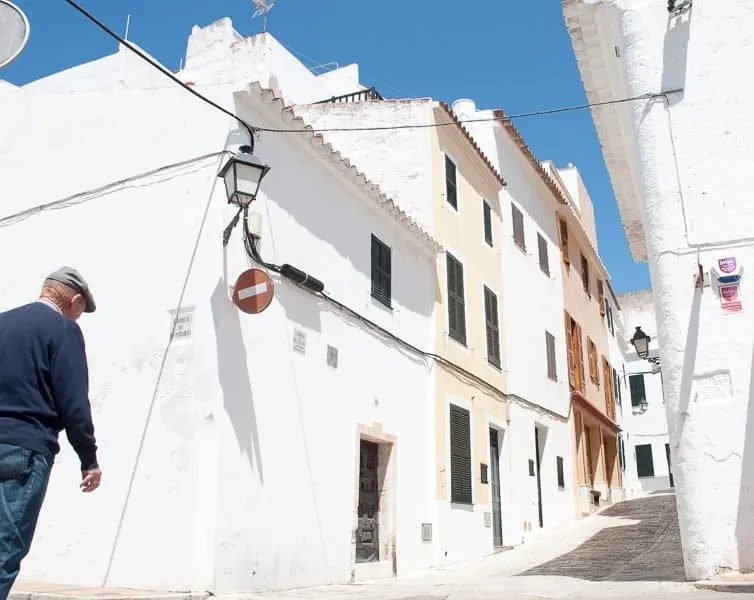
That sentence still catches me a little off guard, because Menorca, about 180 miles northeast off the coast of Spain, is not the kind of place you expect to go back to for a reason. You go back because you want the light, the quiet, the feeling that time has agreed to slow down. You go back for the swimming spots with the metal ladders and the abuelas bobbing in the sea like they’ve been there since the Bronze Age. You don’t necessarily go back because something is happening.
But something is happening this May. And if you’re even remotely interested in photography, in history, or just in finding a corner of the Mediterranean that hasn’t fully been discovered yet — I’d genuinely tell you to book a flight.
The Short Version
Raw Photo Fest, on from the 7th to the 10th. — so hurry (or bookmark it for next year — is a new photography festival on the island, created by Christelle Enquist and Jorge Delgado-Ureña, the couple behind The Raw Society. It’s set in Alaior — not Mahón, not Ciutadella, but the quiet town in the middle that, as Christelle puts it, “didn’t get the memo about showing off.” And this year, one of its central exhibitions will present something that hasn’t been seen in nearly ninety years…
The Detective Story
In 1936, a young photographer named David Seymour — known as “Chim,” one of the four founding members of Magnum Photos, alongside Henri Cartier-Bresson — travelled to Menorca during the early months of the Spanish Civil War. He photographed the island. The people, the villages, the landscapes, the particular suspended quality of a place that hasn’t yet understood what’s coming.
Then those photographs largely disappeared. Scattered across archives, rarely examined together, never shown on the island where they were made. Until a Menorcan architect named Nando Pons became obsessed with finding them.
Working image by image, Pons spent years identifying the locations Chim had photographed — tracking down descendants, matching landscapes, reconstructing moments. His research led him to Carole Naggar, the photography historian who wrote the definitive Seymour biography. Together they went looking for the original files. The search stalled. Then Raw Photo Fest came along and, by some combination of timing and luck and the particular energy that new things generate, reignited the effort.
Most of the photographs have now been found.
So at the festival a selection of the rediscovered images are being shown publicly for the first time — accompanied by a live conversation between Naggar and Pons about the detective work that brought them back. After the festival, the photographs are expected to move toward a permanent home on the island. A book is in early planning.
It is, in the most literal sense, a lost archive coming back to light. On the island where it was made. Ninety years later.
Why Menorca, Why Now?
The easy answer is that Menorca is having a moment. Galleries, collectors, an arts scene that’s been quietly assembling itself while the rest of the world was still only talking about the beaches.
But Christelle and Jorge’s answer is more interesting. They ended up based on Menorca partly by serendipity — Christelle’s mother is from the island — and partly because after years of intense work in places like Iraq and Nepal, they needed somewhere to decompress. Menorca became that place. Poc a poc — little by little — is the local life philosophy, and it’s apparently also how you recover from covering a war.
When I asked Christelle why they chose Alaior specifically, she was direct: “It feels closer to the island’s real heartbeat. Everyday life happening without performance.” The mayor, she added, is genuinely committed to making the town a cultural destination — and also happens to have married them, which makes communication considerably easier.
The festival is in May for a reason too. Menorca’s high season is brutal — everything crammed into July and August. Spring is when the island is green, the wildflowers are out, and you can actually stand somewhere without feeling like you’ve wandered into a queue.
Beyond the Chim exhibition, the programme includes Nick Brandt’s SINK / RISE (on rising sea levels — which lands differently when you’re standing on an island), and John Stanmeyer’s long-term Soil Extinction project with the National Geographic Society. There are talks, conversations, a community of photographers flying in from across the world to finally meet each other in person.
It’s a biennale, so this is the inaugural edition. Which means if you go now, you’re in on it early.
Also They Have An Art Scene Nobody Warned You About
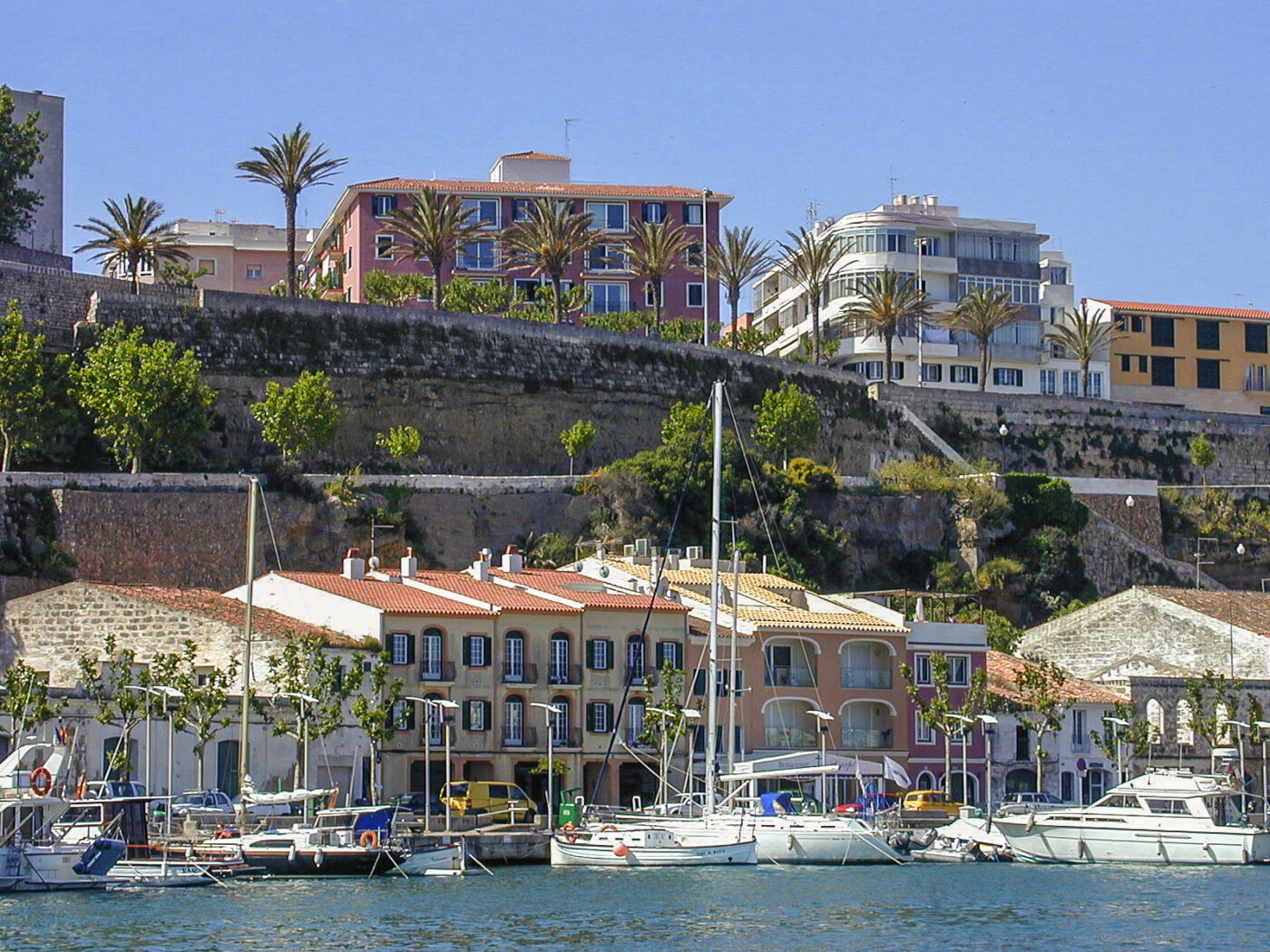
Here’s the thing about Menorca’s art world: it crept up on everyone, including the people on the island. Two institutions in particular are worth building a trip around, beyond the festival. The first is Hauser & Wirth Menorca, which opened in 2021 on Illa del Rei — a small island inside Mahón harbour that you reach by shuttle boat, and which was, before the gallery arrived, a decommissioned 18th-century naval hospital slowly falling apart.
The conservation project alone won a European Heritage Award. Inside, eight galleries spread across restored sandstone buildings with Piet Oudolf-designed gardens running alongside; outside, a sculpture trail with works by Miró, Chillida, and Louise Bourgeois sits in what feels less like a curated installation than a natural extension of the landscape. Entry is always free. It is, by any reasonable measure, one of the strangest and most beautiful places to see contemporary art in Europe — and it happens to be on an island you take a boat to reach, which adds a particular quality of occasion that you can’t manufacture.
The second is Albarrán Bourdais, a Madrid gallery that has planted serious roots on Menorca, bringing in internationally significant work and treating the island not as a seasonal outpost but as a genuine year-round programme. Their José Dávila sculpture trail — Essay on Permanence — runs through October, with works placed across the island in dialogue with its landscape. Between these two spaces, Raw Photo Fest, and whatever you discover by wandering, Menorca has quietly assembled one of the most interesting concentrations of contemporary art anywhere in the Mediterranean. It just doesn’t make a lot of noise about it.
While You’re There
A few things worth your time, mostly courtesy of Christelle, who knows the east coast best.
Eat and drink: Breakfast or lunch at Amapola in Es Castell. Drinks and pintxos at Bar San Jorge (just reopened, very local). Beach dining at Mar de Teranga. Dinner at Agustín in Mahón. The harbour at Vida Una for a nightcap.
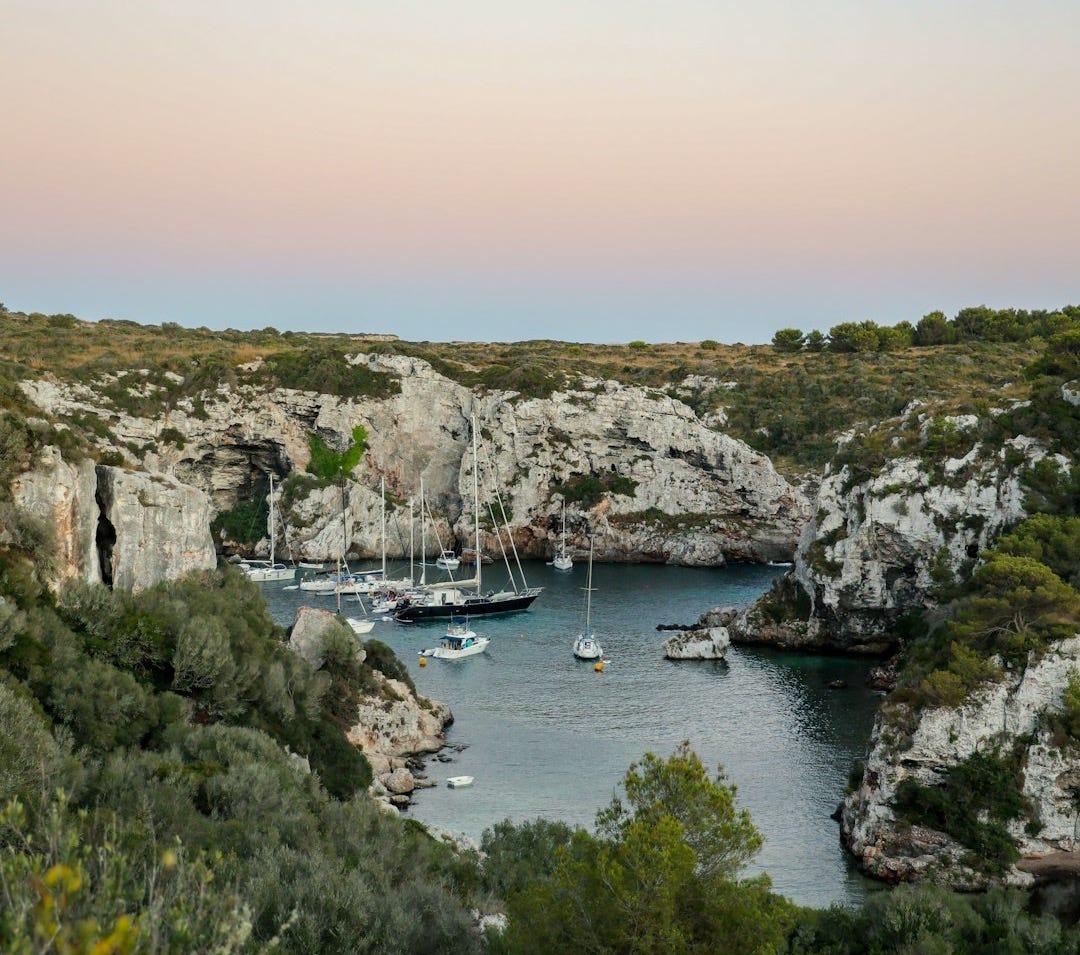
Walk: The Camí de Cavalls, the ancient trail that circles the entire island. Don’t over-plan it. Just pick a stretch and go. Cliffs, forests, dry-stone walls, the occasional cave you weren’t expecting.
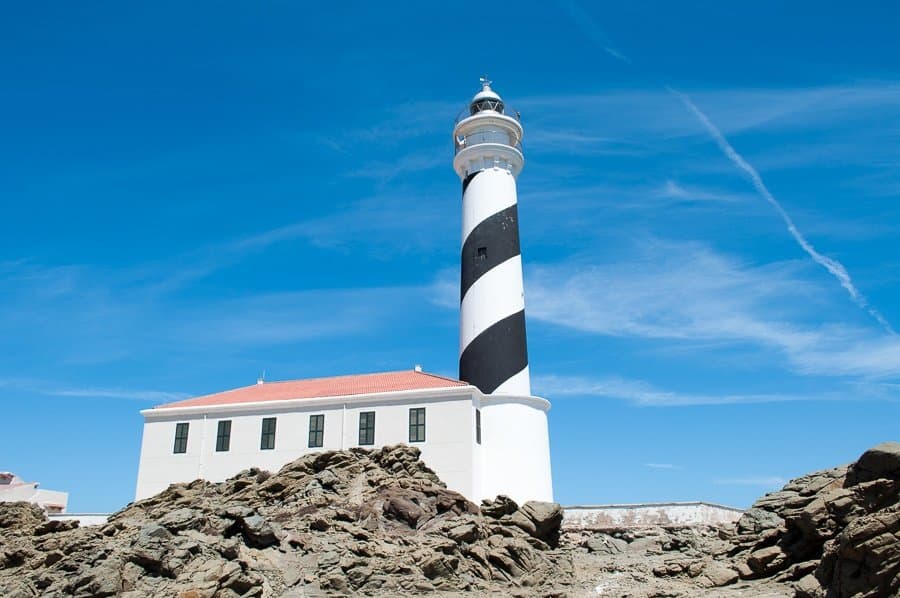
See: Faro de Favaritx, the lighthouse with its almost black-and-white lunar landscape. Es Grau, in the biosphere reserve, where land and water and birdlife all blur together. And the Pedreres de s’Hostal quarries — abandoned stone quarries turned into an extraordinary open-air landscape of sculpture and botanic gardens.
If you’re there in summer: The local fiestas run almost every weekend from June 24 through September. Don’t miss them.
Where to stay: I’ve stayed at Can Albertí, and I’ll keep going back. It’s an 18th-century palace — built in 1740, right in the heart of Mahón’s historic old town — converted into a 14-room boutique hotel. Thick walls, Menorcan antiques, contemporary touches, and an atmosphere that sits somewhere between a grand private home and a very good dream. Michelin-listed. Regularly hosts art events and cultural programming, which tells you something about who runs it and what they care about. The kind of place that makes you want to extend your stay — which, in Menorca, is also very much the island’s fault.
The Raw Photo Fest runs in Alaior, Menorca, this May.


