


NIGHTSTAND
Books we recommend
THE CURE FOR EVERYTHING by Michelle A. Williams, with Linda Marsa
One World, Penguin Random House, 2026, $32
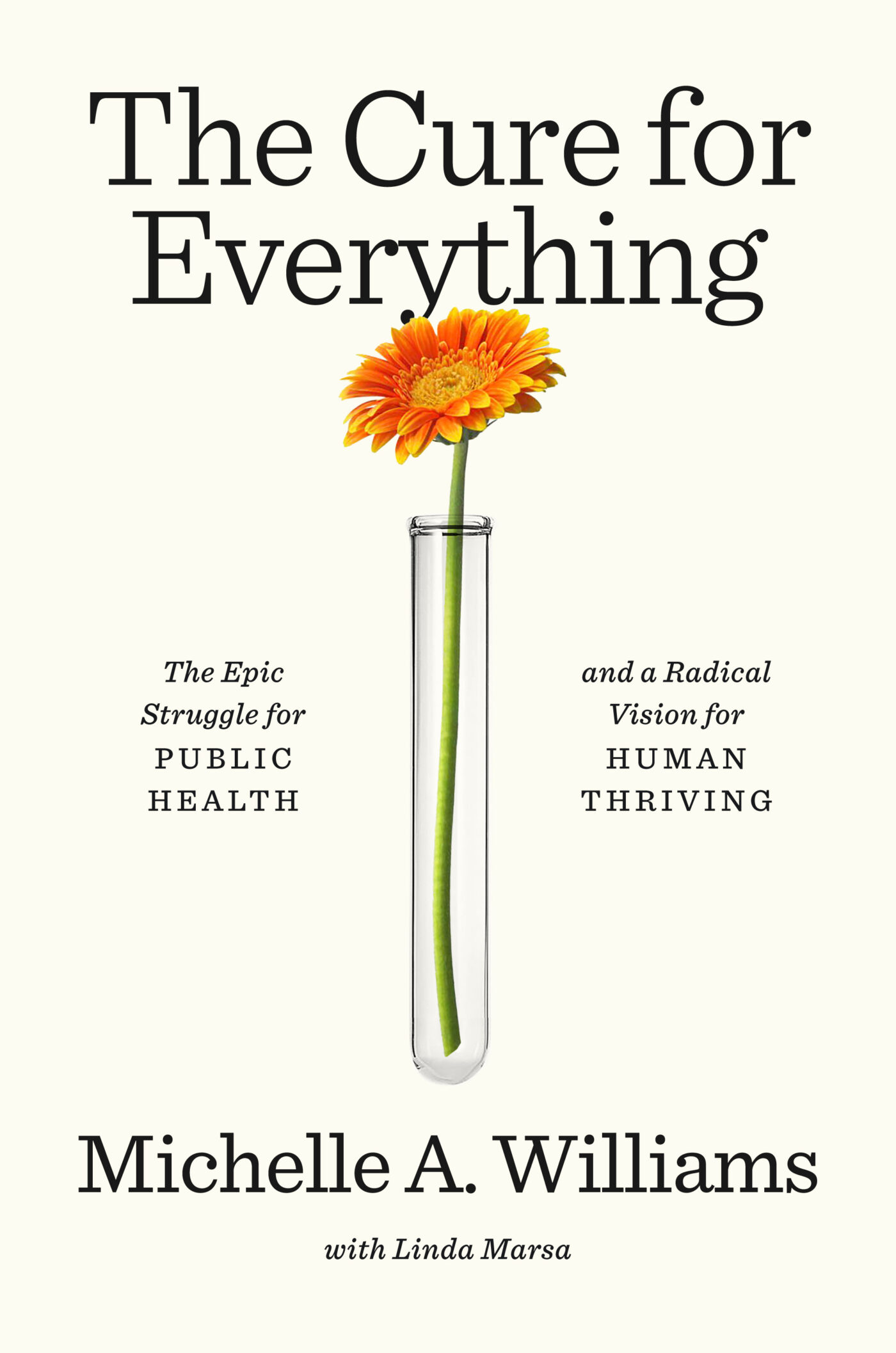 This book has an extraordinarily ambitious title, and threatens to fall under the weight of its own expectation, to bite off more than it can chew. But it does not fail. Although it’s part polemic — we have to get back to a world that cares for, and makes the best decisions for, everyone — and part complete history of everything that ever happened, as far as social reaction to health crises, it holds together. It works! (It’s also part memoir, but, you know, her story is worth hearing.)
Williams is the former dean of the Harvard School of Public Health, so she knows what she’s talking about, which is always refreshing, and Marsa is one of the best science writers of our time. The thesis is that Public Health is health, the most meaningful kind. Making cities sanitary, for instance, was a greater, further reaching improvement in health and life extension than any single medicine, focusing, as they put it, on “the social side of medicine,” and treating “not just individual patients but the whole ecosystem of communities and societies.”
So it takes a village, literally. Williams stresses that changing attitudes and behaviors and customs in a small South American or African community, or to a city as vast as London or Delhi, can eradicate disease and extend lifespans. She’s right of course, even if we rarely think of it like that, besotted as we are by the rock star scientists who come up with some topical treatment or other. This is a lovely, wonky book, and an odyssey, and riveting.
~ Bob Guccione, Jr
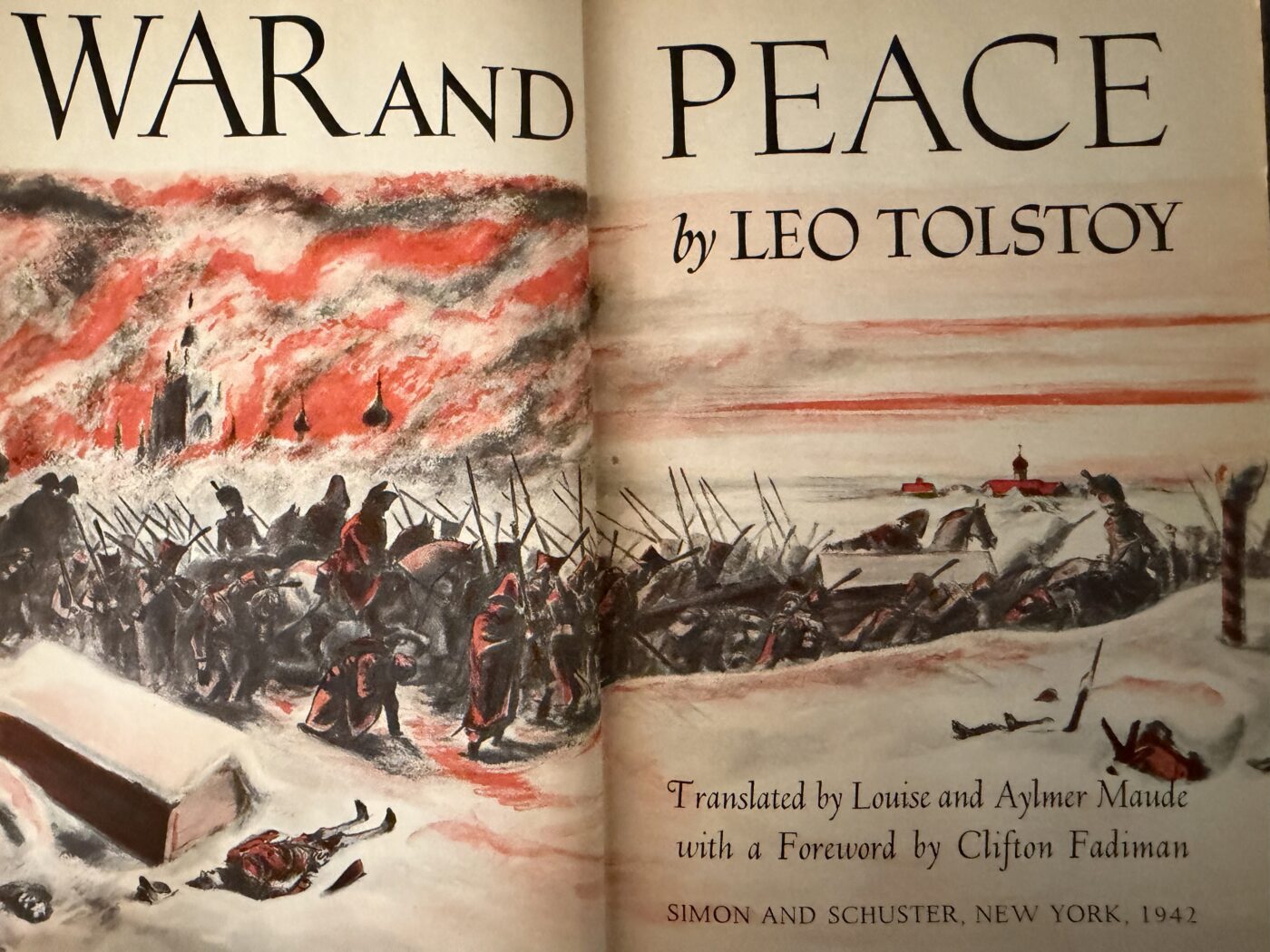
WAR AND PEACE by Leo Tolstoy
Simon and Schuster. 1942
 Turning to the first page of War and Peace is like embarking on a journey across the Russian plains—so vast and endless does the book first seem. But for all its cinematic breath, it’s intensely personal and intimate. Tolstoy shares his philosophical thoughts on war, life, death, his pacifism and spiritual quest. I can’t remember the last time a novel had such an effect on my emotions—and elevated my spirit or made me cry.
War and Peace follows the lives of five aristocratic Russian families during the Napoleonic wars. It opens in the year 1805 and that first page invites us into an elegant soirée taking place. All the talk (some in French, of course) is about Napoleon’s latest conquest of Genoa and Lucca. Before too long, the main characters emerge—particularly, literature’s beloved Pierre Bezúkhov and Natasha Rostóva—and we’re mesmerized by this window into a world of loves and hates, ambitions and despairs, hypocrisy and sacrifice, as the characters navigate glittery Russian society against the messy backdrop of war. It has been said nobody described battle scenes as convincingly as Tolstoy, who himself was an artillery officer for three years in the Imperial Russian Army. During the battles some men will die for the sake of glory, some will run away in fear or confusion. Or, as the young Nikolai Rostóv, in his first battle, naively exclaims, “They’re trying to kill me! Why would anyone try to kill me? Everybody LIKES me!”
If there’s an unassuming hero in this book, it would be Pierre who is known to represent much of Tolstoy’s thinking. At one pivotal moment, it’s Pierre who speaks these famous lines: “I lived for myself and ruined my life … and only now when I am living, or at least trying to live for others, only now have I understood all the happiness of life.” Tolstoy writes about nothing less than the meaning of life itself—which, incidentally, he also addresses in the remarkable sliver of a book A Confession.
Tolstoy spoke a few languages and there’s even a YouTube video of him reading in English. This leads us to the question of which translation is best. Tolstoy was friends with the British expat couple Louise and Aylmer Maude and approved of their translation of his various works. I read a 1942 edition of this version that includes color pages and maps and a most useful list of principal characters.
War and Peace was published in 1869, but it is as timeless as our human emotions. What higher praise can be given of a novel than reading it might change your life.
~ Helen Mitsios
Out of Print Books We Love…
Out of print books are recyclable and inexpensive. If you don’t mind reading on a screen, they can be downloaded for free. No virtual strings attached.
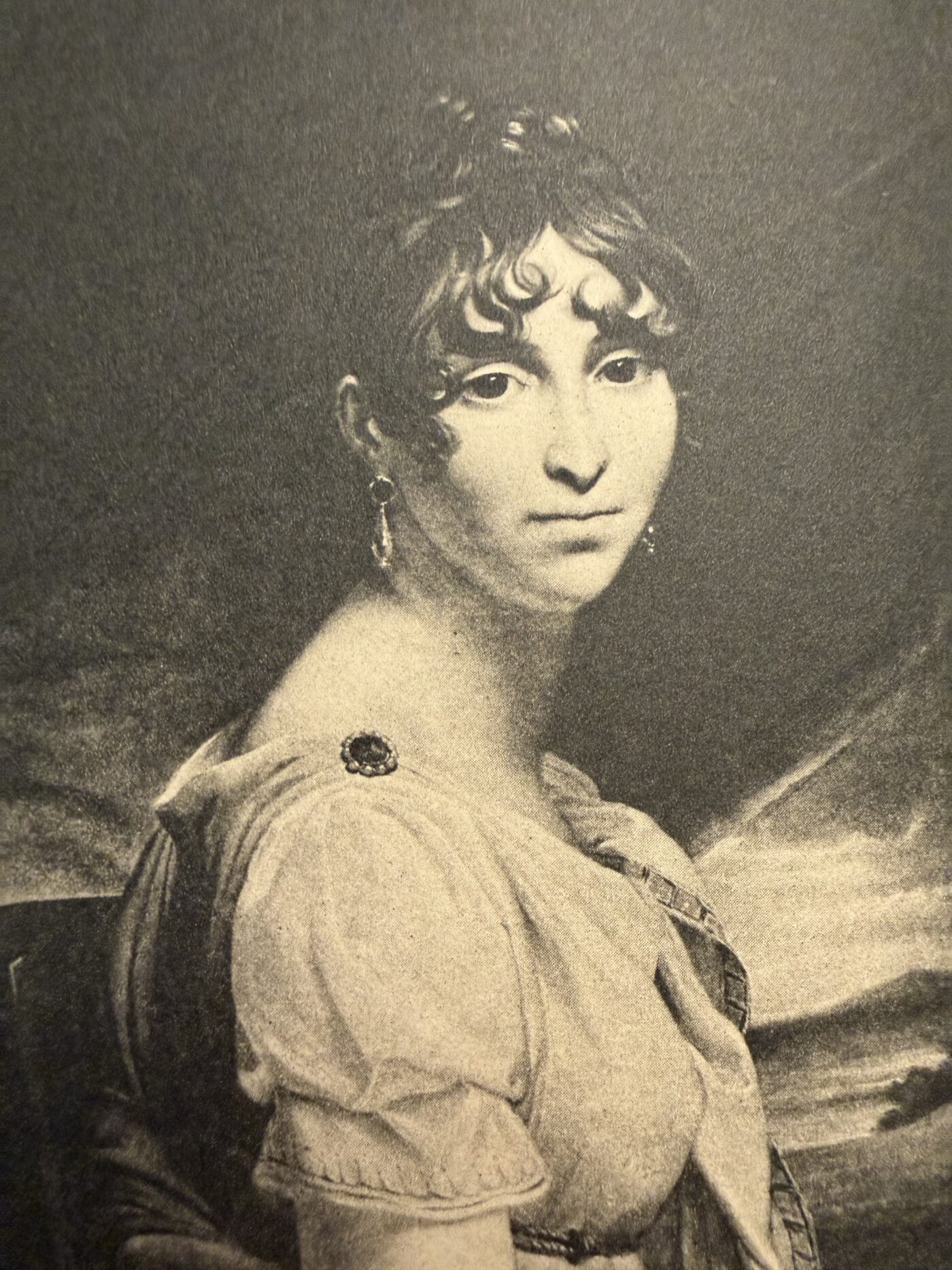
THE MEMOIRS OF QUEEN HORTENSE by Hortense de Beauharnais
Cosmopolitan Books Corp.,1927
I can’t seem to stop reading about Napoleon Bonaparte and his entourage. We recall that Napoleon crowned himself emperor and made his wife Josephine de Beauharnais empress. He also adopted Josephine’s children, who loved him and remained steadfastly loyal after his downfall.
Josephine’s daughter, Hortense, writes about a life of almost unimaginable luxury and courtly influence. But in truth, as she tells us, she wasn’t happy. She had virtually no freedom, was surveilled a good part of the time by servants who could be bought and spies who would report any movement or perceived indiscretion, and controlled by a chronically suspicious husband. Napoleon had arranged the marriage for her with his brother Louis. He also crowned Louis the King of Holland. Hortense, who then became queen, hated both the idea of being queen and living in Holland. It was a marriage, but not a match. Hortense asked for a divorce that Napoleon wouldn’t grant. She writes about the marriage, with painfully honest and unexpected revelations.
Hortense was at her mother’s side for much of the time, and subsequently at Napoleon’s side too. She witnessed the teary eyed group (and Napoleon was teary eyed too) when he divorced Josephine. She was at Malmaison, Josephine’s chateau outside Paris, after Napoleon abdicated in 1815. He said goodbye to her and smiled. It was the farewell to his life of power and magnificence. The weeping Hortense thrust her vast diamond necklace into his hands. They never saw each other again.
Hortense begins her memoir: “Some people have praised me unduly, others blamed me unjustly, few have really known me.” The memoir was not published in her lifetime, but she asks posterity to judge her fairly. She wants us to know her true self, and she doesn’t hold back.
~ Helen Mitsios


