


OUT OF PRINT!
A Moveable Feast
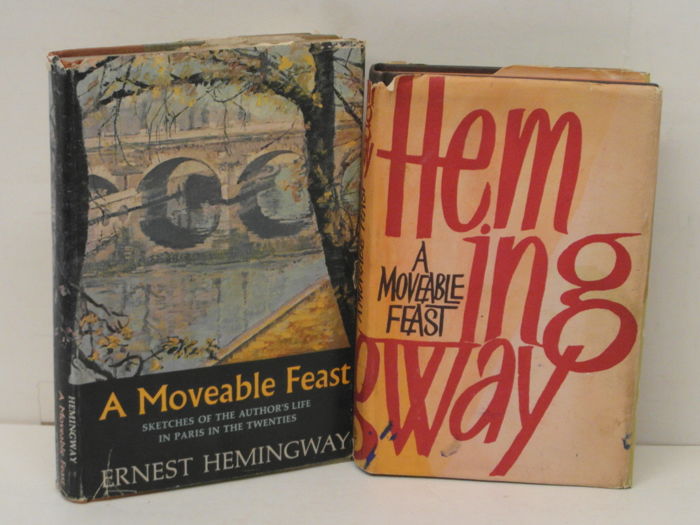
A MOVEABLE FEAST By Ernest Hemingway, Simon & Schuster, 1964
Out of print books are recyclable and inexpensive. If you don’t mind reading on a screen, they can often be downloaded for free. No virtual strings attached.
For Ernest Hemingway, posterity recorded his wives’ rivalries and reveries alike. Therefore there’s a ton that’s been written about Hem’s (as some friends called him) personal life – enough to keep doctoral dissertations still flowing over 100 years later.
A Moveable Feast, the posthumous book his widow and fourth wife Mary edited and arranged was published in 1964, and since then every syllable has been parsed, and it’s known that Mary gave the book its title – a phrase from one of Hemingway’s letters. Purists consider it sacrilege that Mary altered the order of some chapters and published segments Hemingway didn’t want included and removed others like his comments about leaving first wife Hadley to marry her good friend Pauline.
Wives and Hemingway’s sad demise aside, the memoir of his youthful days in Paris when he was young and poor is simultaneously an elegiac and a happy story because he often writes he was happy then. Though too poor to buy books he borrowed them from Shakespeare and Company’s “library,” and through scrimping and saving, he managed to live and eat well and go on skiing trips to the Austrian alps with Hadley and their son, when lodgings cost $2 a day.
Reading the memoir you’ll recognize the origin of very famous quotes. For example, Ezra Pound taught him “to mistrust adjectives as I would later learn to mistrust certain people in certain situations.” His now legendary portraits of famous personages like F. Scott Fitzgerald, Zelda, and Gertrude Stein are as succinct and piercing as a plumber’s snake. Fascinating are glimpses into conversations Hemingway has with Ezra Pound when they discuss Russian writers and Hemingway says Dostoevsky “almost never used the mot juste, and yet had made his people come alive at times, as almost no on else did.”
After reading the 1964 edition and ignoring all the hoopla and metatext about it, one can go on to deeper exploration and read the “restored” edition of the book that includes more original material, that was published in 2010 and edited by Hemingway’s grandson. And for viewing, there’s Midnight in Paris, Woody Allen’s take on expat life during the 1920s.
Best to read the memoir for what it is, with its many now-enshrined sentences like “there is never any ending to Paris and the memory of each person who has lived in it differs from that of any other.” There is a powerful poetic beauty in the prose that is as honest and true as the author aimed for; and therefore the work lives on. The book casts a spell as we too believe, if only for the duration of the reading, that love and the good life can come cheap, like the carafes of house wine Hemingway drank at his hangout La Closerie des Lilas. The restaurant is still there and the bar is named after him.
Available on Kindle $8.99
Available on Thrift Books $7.69
Available on Better World Books $5.96


