


THE BEAUTY OF TARANTO
This small southern Italy town has endured an environmental nightmare but is an unexpected treasure
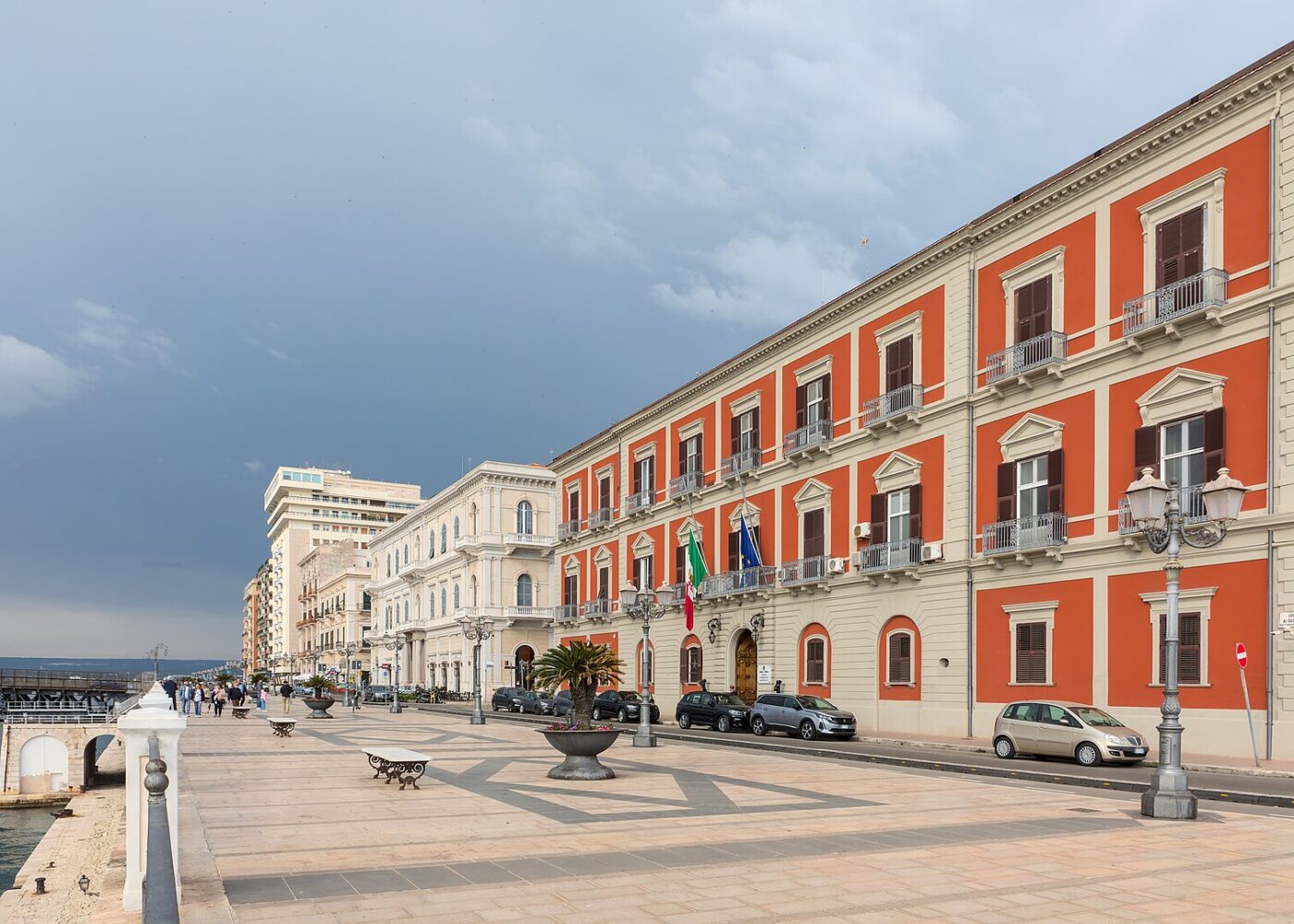
When travelers dream of Puglia, images of whitewashed trulli in Alberobello, the turquoise waters of Polignano a Mare, or the sunlit olive groves near Ostuni often come to mind. But there’s a city in this region that few consider, and for years it hasn’t exactly enjoyed a shining reputation: Taranto.
I’ll be the first to admit, Taranto wasn’t on my radar as a must-see destination. It has carried the weight of industrial challenges, to put it mildly, negative press, and the perception of being “gritty” rather than glamorous. It is adjacent to one of the most notorious steel producing plants in Europe, Acciaierie d’Italia (formerly and more infamously known as Ilva). The plant is an environmental disaster and has produced a health crisis for Taranto, which has been dealing with the pollution for decades and experiences unusually high cancer rates compared to the rest of Italy. The Italian government recently took over the plant and is attempting to improve the situation and find new investors to buy it.
But as someone who believes that travel is about curiosity, discovery, and looking beyond the obvious, I recently made my way there.
What I found was eye-opening.

Taranto sits in the arch of the heel of Italy, poised between two seas — the Mar Grande and Mar Piccolo — and was settled by the Greeks. It was once one of the most powerful centers of Magna Graecia, with roots stretching deep into ancient Greek history. Walking its streets, you can feel that layered past: fragments of Greek walls, echoes of a medieval old town, and the bold resilience of a place that refuses to be defined by its struggles.
What surprised me most, however, was the warmth of the people and the sense of pride in what Taranto is becoming. There’s a raw authenticity here that feels rare in today’s Italy, where tourism has transformed so many towns into polished, curated versions of themselves. In Taranto, you see life as it really is. Barefoot children play in the narrow alleyways, fishermen haul in their cozze (mussels) from the Ionian Sea, and families gather in trattorias where the seafood is as fresh and flavorful as anywhere in the Mediterranean.
And while Taranto may not have the polished perfection of Puglia’s more famous hotspots, it has something equally compelling: potential. With the 2026 Mediterranean Games on the horizon, the city is preparing to welcome the world. Investments are being made, infrastructure is improving, and a cultural reawakening is taking place. For travelers willing to go beyond the usual, Taranto offers an opportunity to witness a city in transformation.
One shining example of this new chapter is Relais Histò, a property that captures both the soul of Taranto’s past and the vision of its future. Owned by the Colomba family, Relais Histò sits on nearly 100 hectares of land, is home to one of the largest spas in southern Italy and has extraordinary gardens that supply the hotel’s kitchen with fresh produce. The family has preserved the site’s deep historic roots while positioning it firmly within the international luxury market, showing the world the gem that Taranto truly is.
Puglia truly has some of Italy’s most remarkable cheeses, but one true showstopper was found in the heart of Old Taranto at Caseificio Pietro Marzulli, a family-run cheese shop and factory where I had the chance to taste their exquisite, freshly pulled mozzarella. Watching the artisans stretch and mold the curds by hand- a centuries-old craft- was mesmerizing. The result? Mozzarella that melts in your mouth like butter. And, of course, I can’t forget the rich, velvety stracciatella, the creamy filling that gives burrata its soul.
In Martina Franca, the experience was just as unforgettable. I spent the afternoon with Giovanni Colomba Jr., the grandson of Giovanni Colomba- owner of Relais Histò in Taranto. Together, we sat at Trattoria Da Ricci, a local favorite nestled in the heart of Piazza Maria Immacolata, where time feels like it’s stood still. The only wine on the menu is their own house pour- perfectly paired with Puglian comfort dishes like bombette, straccetti impanati, and salsiccia that even a nonna would be proud of. To finish, we wandered to Latteria del Ringo, where I tasted some delicious artisan gelato- a scoop of Dark chocolate and Pistachio to compliment served with that signature Puglian warmth that instantly makes you feel at home.
Back in Taranto, I couldn’t leave without experiencing the city’s pride and joy- its famous mussels. This time, I joined Giovanni Colomba Sr., who took me out onto the serene Mare Piccolo to meet a local fisherman aboard his tiny wooden tender. Balancing was half the adventure. Out at the mussel farms, we pulled up long ropes of shells stacked like strands of hard rock candy, glistening in the sun. Giovanni pried one open with his knife and handed it to me- raw, fresh, and straight from the sea.

I hesitated for a second, then said, “Well… here goes nothing!” It turned out to be the freshest mussel I’ve ever tasted- pure, salty, and alive with flavor. Not refined or delicate, but raw, real, and deeply tied to the soul of Taranto itself
What I discovered in Taranto is that beauty doesn’t always shout — it whispers. It asks you to look closer, to slow down, to understand the story beneath the surface. And that’s exactly what makes it special.
As the CEO of a luxury travel company, I curate journeys that often highlight Italy’s most dazzling treasures. But Taranto reminded me that luxury isn’t always about opulence. Sometimes it’s about authenticity, about being the only foreigner in a small piazza and feeling welcomed like family, or about watching a sunset over the Ionian Sea knowing you’ve uncovered a place still unrevealed in guidebooks.
Taranto may never be the “next Positano” or “new Florence” and that’s precisely its magic. It’s Puglia at its most unexpected, a reminder that Italy always has another secret waiting to be discovered. So, as the world turns its attention to Taranto in 2026, my hope is that more people will experience what I did: the pull of a city that’s raw, real, and quietly unforgettable.
Sarah Thompson is the founder and CEO of LUXAMA Travel


