


PRAGUE, THE FAIRY TALE CITY OF MEMORIES
One of the world’s most beautiful places has had a torrid history
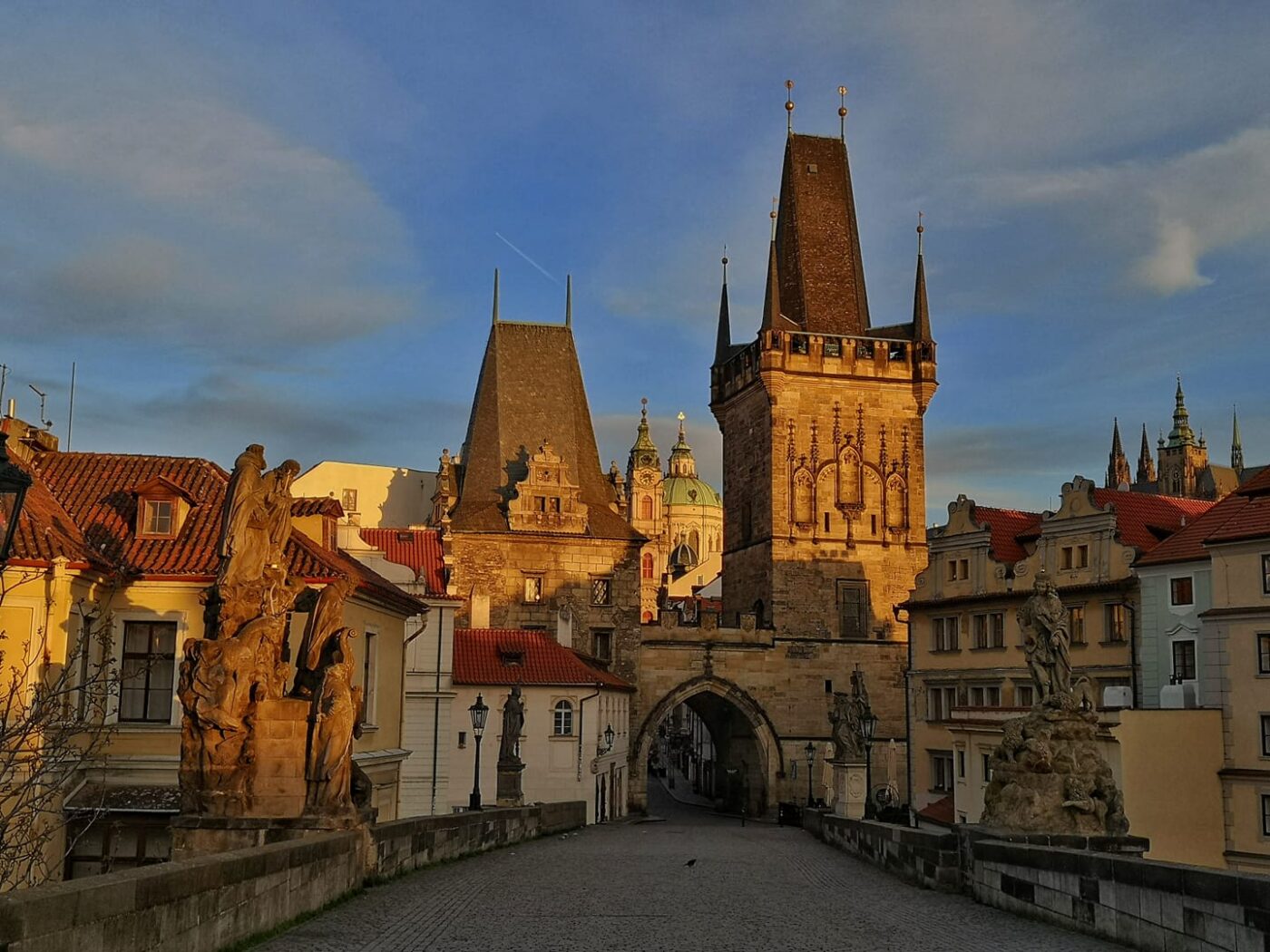
Prague, in the heart of Europe, is a city full of memories. Less than forty years ago it was still in the grip of hard-line communism; and before that, when Stalin’s men rigged the elections in 1948, the city was recovering from the Nazi Occupation.
Prior to that, they squeezed in twenty years of happiness — the First Republic of Czechoslovakia. Before the break-up of the Austro-Hungarian Empire, there were three centuries under Habsburg rulers, preceded by the independent kingdom of Bohemia through the Middle Ages, with their greatest king, Charles IV, who built the famous bridge and opened the renowned university, both bearing his name.
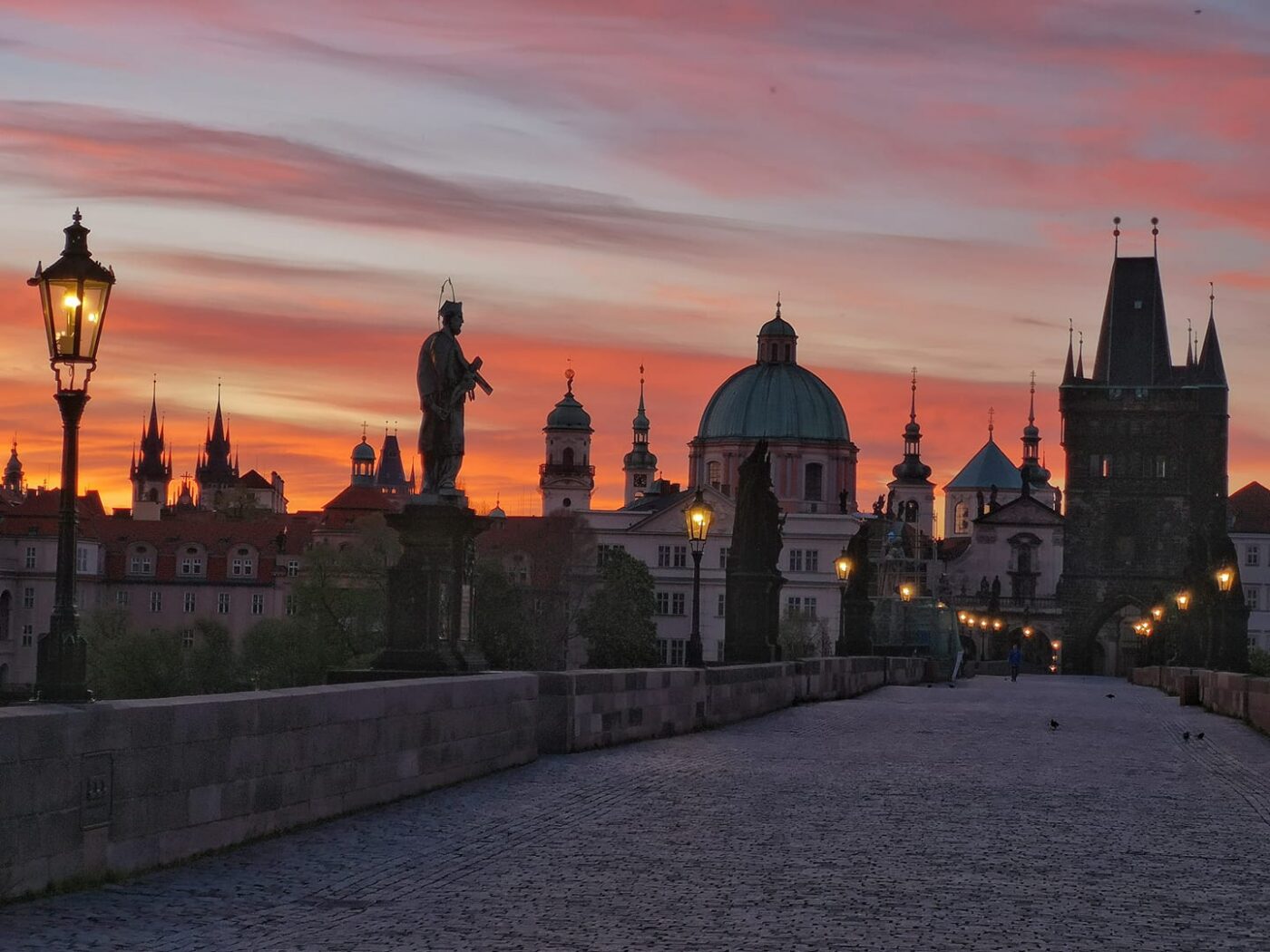
Recently, the Czech Republic celebrated the 700th anniversary of his birth.
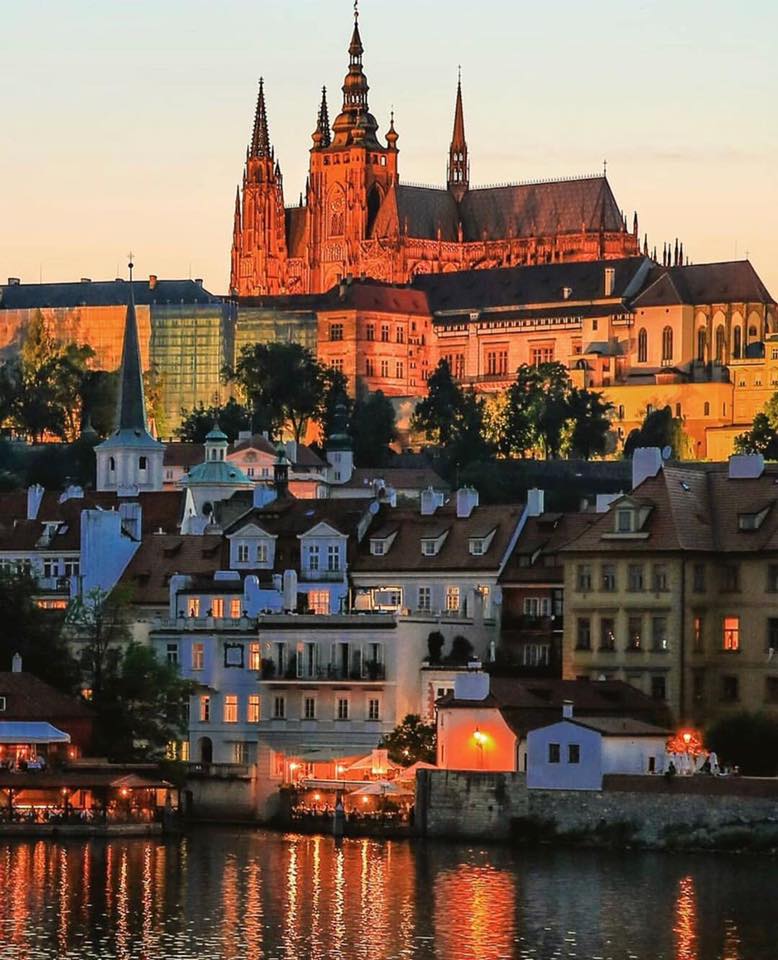
The scale of the great medieval buildings which dot the Old Town and the Lesser Bank of the great Vlatava River show that in the Middle Ages Prague was a city of importance, equal, in the 14th century, with Rome and Paris. There’s the classic vista of the wide river flowing through the city traversed by the famous Charles Bridge, and, on the far bank, the progression of fortified towers, onion domes, cupolas and spires of churches and monasteries, up to the great royal castle rising over all this, itself crowned with a spiky gothic cathedral. This view alone imprints the city on the memory. This is heritage as theatre.
Thousands of apartments across the city are haunted by the Gestapo raids during the Nazi Occupation. Starting only a few years later and lasting until the Velvet Revolution of 1989, people lived in fear of the dawn knock of the StB, the dreaded Soviet Secret Police. I know an architect who lives in the villa occupied briefly by the brother of Reinhard Heydrich — the architect of the “Final Solution of the Jews” and, until his assassination in Prague by Czech parachutists in 1942, the country’s so-called Nazi “Protector”.
The mansion Reinhard Heydrich himself and his family occupied is only a half hour drive from the centre. It had been confiscated from a Jewish industrialist, and you can stand on the very spot, just outside the drive gates, where Heydrich’s eldest son was run over in an accident in 1943. Researching a novel, I met the last Jewish slave worker on the estate who, being a doctor in his free life, ran out to try to save the boy. Mrs Heydrich, as soon as she arrived on the scene, pushed the doctor away, and picked the boy straight up, ensuring he broke his spine and died.
At Bubny Station, despite being very near the city centre, the whole landscape with its derelict railway yards, seems strangely empty and desolate. The station building is in the semi-usable state so many buildings are in this country, the legacy of four decades of Soviet ‘socialism’.
 After a while one gets used to sad, unpainted, grungy interiors without a spark of beauty or comfort. I supposed that in 1942, the year that Prague’s fifty thousand Jews were rounded up and sent to Theresienstadt, the ghetto transfer camp for Auschwitz, this station was in better condition. Here and now I can touch the very doors that all those fifty thousand passed through on their way to the platforms –– the de facto gates of hell. The Nazis ordered all heads of families to bring their door keys, which they were made to surrender in this booking hall; it made stealing their homes and their possessions much easier.
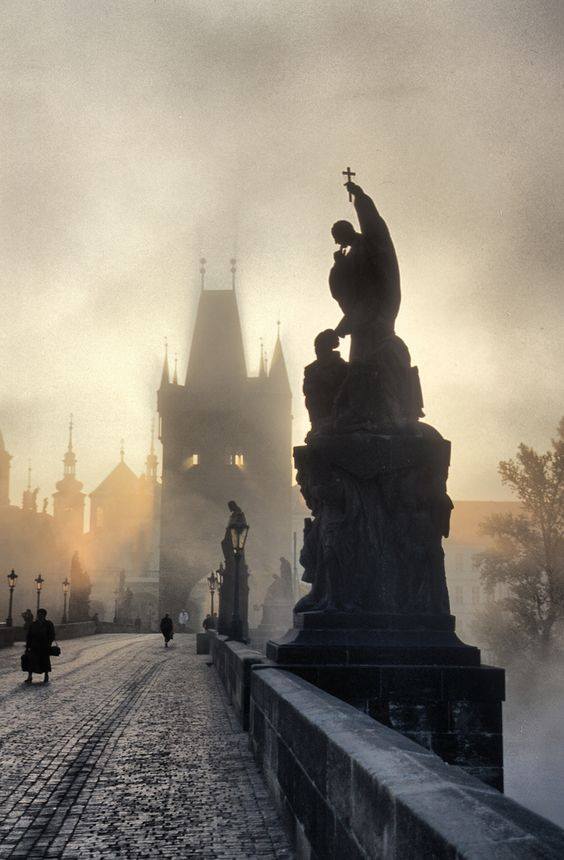
To feel history one must be able to touch the stones, the wood, the very fabric of the place of events both tragic and joyful. On the Charles Bridge you can trail your hand on the stone parapet over which was thrown the priest, John of Nepomuk, who, after torture, was drowned in the Vltava river here at the behest of Wenceslas IV, King of Bohemia, on March 20th, 1393. March 20th 1393 when Saint John of Nepomuk, as he now is, was murdered fell on a Thursday, when Praguers would have been buying fish for their Friday observance.
I keep a thousand-year calendar on my desk –– it takes the sting out of history to know that the Battle of Waterloo, for example, took place on a Sunday, when the shops must have been closed. The memory of Prague under Communism, when the whole place was unpainted and grey– the foggy smoke from brown-coal lingering in the streets; few shops; only a handful of restaurants and many buildings shrouded in scaffolding for never-to-be completed repairs was, however, of a very romantic and mysterious city.
Now gaily repainted, the fanciful baroque houses which give the city its character today do at least raise the spirits, and nowhere is more joyful than the Estates Theatre –– the perfectly preserved and fully-functioning eighteenth century theatre, with its tiers of boxes, where Mozart premiered Don Giovanni. A carefully researched replica of that premiere is often performed, including the low lighting level originally from candles. Prague is also a city of music, with three orchestras and every day one can find many concerts or musical events. Music has always been Prague’s antidote to the grim realities of history.
The doorknobs of the boxes in the Estates Theatre were those once grasped by gentlemen in powdered wigs and frock coats, and ladies in wide silk skirts and outrageous hats.
Or you can end a day in Prague by dropping in on vespers at the gothic church of the Emauzy Monastery. Daily at 6pm when the light streams through the west windows, you can sit and listen to Latin plainsong sung by the few elderly Benedictine monks filling the stone vaulted interior.
Luckily, for the visitor, Prague has the most modern and complete public transport system on earth. Over the entire 200 square miles of its metropolitan area, nowhere is more than 5 or 6 minutes’ walk to a transport stop: tram, bus, Metro. And an app tells you when the next service is arriving – and whether or not it’s late, and whether there’s room for a pram and so on. And the tram vehicles are advanced and comfortable.
Prague, The Golden City, has come through it all…
PRAGUE PRACTICAL
City website: www.Prague.eu
Use Prague public transport – there is no better coordinated system on the planet. Unified tickets take you everywhere by tram, Metro, bus, train and funicular railway: http://www.myczechrepublic.com/prague/transportation.html
Hotels
The Grand Mark: A graceful and dignified baroque palace right in the centre for walks in the Old Town, good food too: www.grandmark.cz
The Alchymist Grand Hotel and Spa: Outrageous extravagantly baroque boutique hotel, worth going to for drinks or to eat if you’re not staying there: www.alchymisthotel.com/en/
Hotel U Raka: Charming, almost rustic hotel down winding cobbled streets in the Castle district: www.hoteluraka.cz/cs/
Restaurants
The French Restaurant at the Obecni Dum, a spectacular Secessionist interior with first class food and service. www.francouzskarestaurace.cz/en/
The Café Louvre: Viennese-style coffee house and restaurant founded in 1902, patronised by Albert Einstein and Franz Kafka – very atmospheric. www.CafeLouvre.cz
The Marina Ristorante: Good food on a deluxe (stationary) barge overlooking the Charles Bridge. http://marinaristorante.cz/menu/aktualita/
Places to visit
Bubny Station is open, as it is still used – there is now a monument nearby:https://en.wikipedia.org/wiki/Praha%E2%80%93Bubny_railway_station
A Heydrich Assassination Museum is housed where his executioners died, the Ss. Cyril and Methodius Cathedral on Resslova Street: https://en.wikipedia.org/wiki/Ss._Cyril_and_Methodius_Cathedral
The Estates Theatre – where Mozart’s Don Giovanni plays in the summer: www.narodni-divadlo.cz/en
The Emauzy Monastery: The 14th century buildings, repaired after War damage, house a working Benedictine abbey: www.emauzy.cz/en/index.php
Prague Castle. When you visit the Castle, make sure you leave enough time to see the Lobkowicz Palace, a part of the complex. Back owned by the its aristocratic family, view parts of its once world famous collections including Beethoven manuscripts. Take the audioguide: www.lobkowicz.com/en/collections/lobkowicz-palace/
Don’t miss the gardens below the Castle: A series of interlinked charming Baroque gardens behind a row of palaces, and – nearby – the great formal gardens of the Wallenstein Palace are a delight to visit in spring or summer (open-air concerts are also held at both locations). www.palacove-zahrady.cz/cs & https://en.wikipedia.org/wiki/Wallenstein_Palace
Gothic Art Museum A world-class collection of Gothic Art housed in a medieval convent: www.ngprague.cz/en/objekt-detail/convent-of-st-agnes-of-bohemia/
The Jewish Ghetto. The Jewish Museum controls the surviving synagogues, the old Jewish cemetery and the holocaust memorial in what was once the Ghetto – buildings not destroyed by the Nazis as they had intended to create from them ‘a museum to a lost race’: www.jewishmuseum.cz/en/info/visit/
The libraries of Strahov Monastery: Vast and ancient libraries and a cabinet of curiosities of a working monastery. www.strahovskyklaster.cz/en/
Inclined railway. Get to Strahov by inclined (funicular) railway with spectacular views over the city: www.prague.net/funicular
Custom guided walks through Prague: Nina Jelinkova, Friendly Walks Prague
Paul Evans Paul Evans personally conducted tours of the Old Town. Email: Tallpaul2point0@icloud.com and phone: +1 (904)465-7171
© STEPHEN WEEKS 2026


