


WINEDADDY
Native Son: Making the Bianco di Fagagna, which is really Picolit
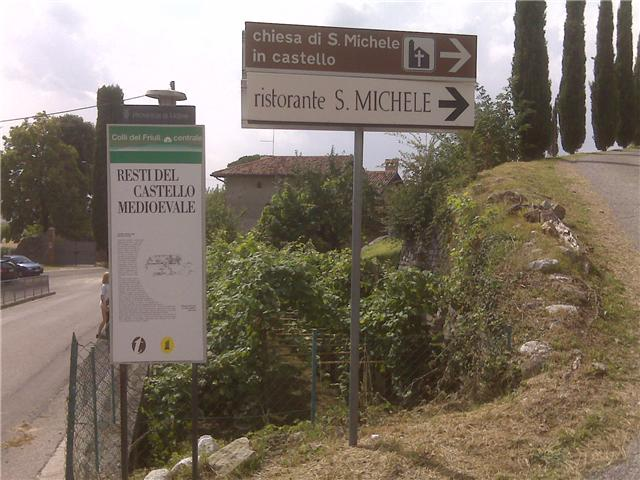
My encounter with Picolit really starts in 2004 when I was given a Citidenza Honorario (Honorary Citizenship) in Friuli, Italy, in the town of Fagagna, where my mom and dad were both born and which is north east of Venice. I remember my uncle Batista pouring me some Picolit when I was a young boy visiting Friuli from Canada, where I was born, and making quite a fuss about it.
Little did I know that later in life I would be back to Fagagna to plant a vineyard.
At the Honorary Citizenship ceremony there were numerous dignitaries, amongst them the President of the region who said “ Donald, this is all very nice. However, you know that over 1200 men from this small region travelled abroad and helped build the great country of Canada. I think it would be appropriate if you came back to Friuli and did something here for your people, especially as a tribute to your mom and dad”.
Following the ceremony I was invited to dinner at the restaurant in the Castello, which is owned by Count Fabio Asquini. At dinner, the Count began to tell me about the history of his family and Picolit and invited me to visit the archives in his family home the next day. During the tour he was very proud of the fact that his ancestors’ extensive vineyards in the 17th century grew Picolit and would ship it around the world in hand-blown Venetian glass.
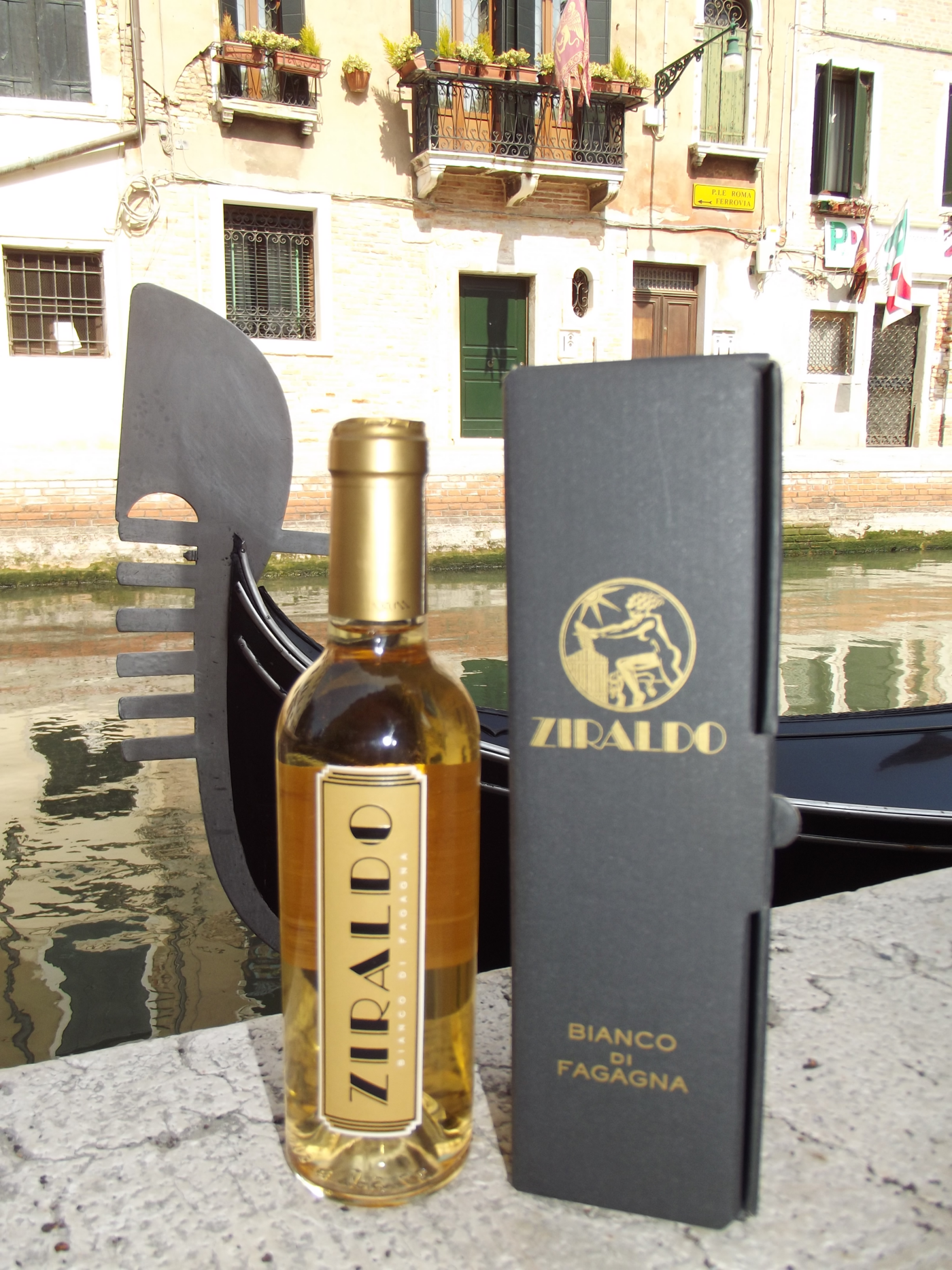
Picolit, a native, autochthon variety, was cultivated by the Romans. It became Friuli’s own variety and a symbol of the region. Its original name, Picolitto, means ‘very little’, which illustrates the fact that due to genetic sterility of the flower cluster, few berries actually pollinate. The low yield per vine is due to the tendency of the berries to ‘shatter’ during flowering, often only yielding 5 to10 berries per cluster. It requires the perfect site, with nutrient poor soils, south facing the sun and good ventilation.
The first official document that shows the name Picolit dates back to 1682. The first Picolit vineyard appears to have been planted by a woman, Pantasilia Capiferro, in Rocca Bernardo. Count Fabio Asquini di Fagagna is credited with meticulously cultivating Picolit in the mid 1700’s.
They selected ideal sites, developed training systems (replicated in the small vineyard currently below the Castello). They bottled the Picolit in delicate hand blown glass bottles made in Murano. The delicate wine was transported by donkey to Venice and then on to the Royal Courts of Austria, the Czars of Russia, Kings and Queens of Spain and England, and to the Pope.
Author Burton Anderson once wrote that, “by the mid-19th century, Picolit was undoubtedly Italy’s most prestigious wine.” Celebrated Venetian playwright, Carlo Goldoni, called it “the delight of popes, cardinals and emperors.” Presumably in that order of importance.
Currently it can only be produced in the DOCG (Denominazione di Origine Controllata e Garantita) in the Colli Orientali del Friuli area of Friuli-Venezia-Giulia. The DOCG limits yield to 40 quintals (about 8800 pounds) per hectare. There are only about 60 hectares planted.
The berry is small, oval with a firm resistant skin and large pips. Budbreak is early while ripening is late which lends itself to good hang time. The grapes are picked, then left to dry in racks, a process known as appassimento, which again reduces the amount of wine, thus its name Picolit.
Picolit should be drunk alone to best savor its freshness and richness of flavor, typical of northern wines, as well as its sweetness and concentration, and the dried fruit aromas. Italian wine critic Luigi Veronelli stated that “Picolit was to Italy what Chateau d’Yquem is to France.” Veronelli suggested to me that I request a D.O.C. Communale designation for Fagagna because, under current DOC regulations, the name Picolit could not be used for wine made in Fagagna.
I decided to plant Picolit in Fagagna to honour my mother and father’s birthplace. I was also told that there is a road behind my family’s Ziraldo Azienda Agricola called Viniuol (small wine road) where Picolit was grown as a hedgerow supported by stone hooks along a south-facing stone wall. So we planted some Picolit vines there too.
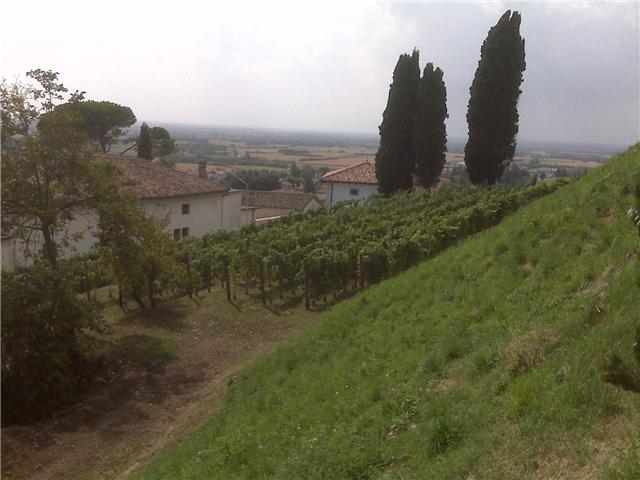
We planted 1000 vines on the hillside of the Castello for which the rent paid would be twelve bottles of the precious wine produced. That harkened back to when my family were peasants in Fagagna and they paid their rent/stipend by giving a portion of the crop to the landlord. Another vineyard was planted on an adjacent hillside.
One small problem, however —- due to regulations, we are not allowed to call the wine Picolit because Fagagna is not in the official DOC region that lists Picolit as an authorized variety. So I started the long process of requesting a declaration of a “DOC Communale” for Fagagna, which would then allow me to put Picolit di Fagagna on the label.
The current vintage will be a Vino da Tavola (table wine), the same designation used by Marche Peiro Antinori when he ran into the similar problem with his Tignanello, the Super Tuscan which he could only call Vino da Tavola because it also contained an unauthorized grape variety for the DOC he was located in.
As coincidence would have it, I met Aman Ziai, a well connected architecture and planning professional, at Vinitaly in April, 2009 where I received the Grand Premio, at Vinitaly, on behalf of Inniskillin, the vineyard I started in Canada. He indicated he would do what he could to assist.
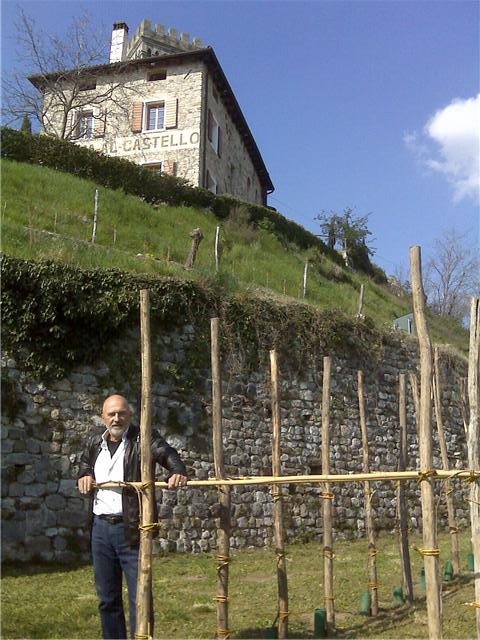
Well, after many years I must admit that I finally conceded defeat. So instead of calling the wine by what I considered its rightful name, I would call it Dolce Di Fagagna. But that was also refused by the authorities, who finally let me name the wine Bianco di Fagagna. Not very creative but it does speak to the origin of the wine and the birthplace of Picolit — Fagagna.
The first vintage of Picolit from the vineyard was vinified in 2008. The grapes were harvested and then dried appassimento in wooden boxes, then fermented in oak barrels.
So now I present the Picolit (in everything but official name), made in honor of my mom, Irma (née Schiratti) and father, Fiorello Ziraldo, from Fagagna.
Unfortunately, during the few years through COVID the vineyard was neglected and when I recently visited the vineyard, I discovered a young man now rented it. He’s also a professional photographer and took these pictures. We are working on redeveloping the Picolit brand.
We will keep you posted on when it will be available in Italy, along with my Ziraldo Icewine. www.lecantinedisecondo.com
Anyone interested in purchasing it, please contact me at donald@ziraldo.ca
I am fiercely proud to be Canadian, and equally proud of the cultural aspect of being Italian, Friulian in particular.


