


BERLIN REVISITED
We visit the city, through the eyes of my wife, who was born there
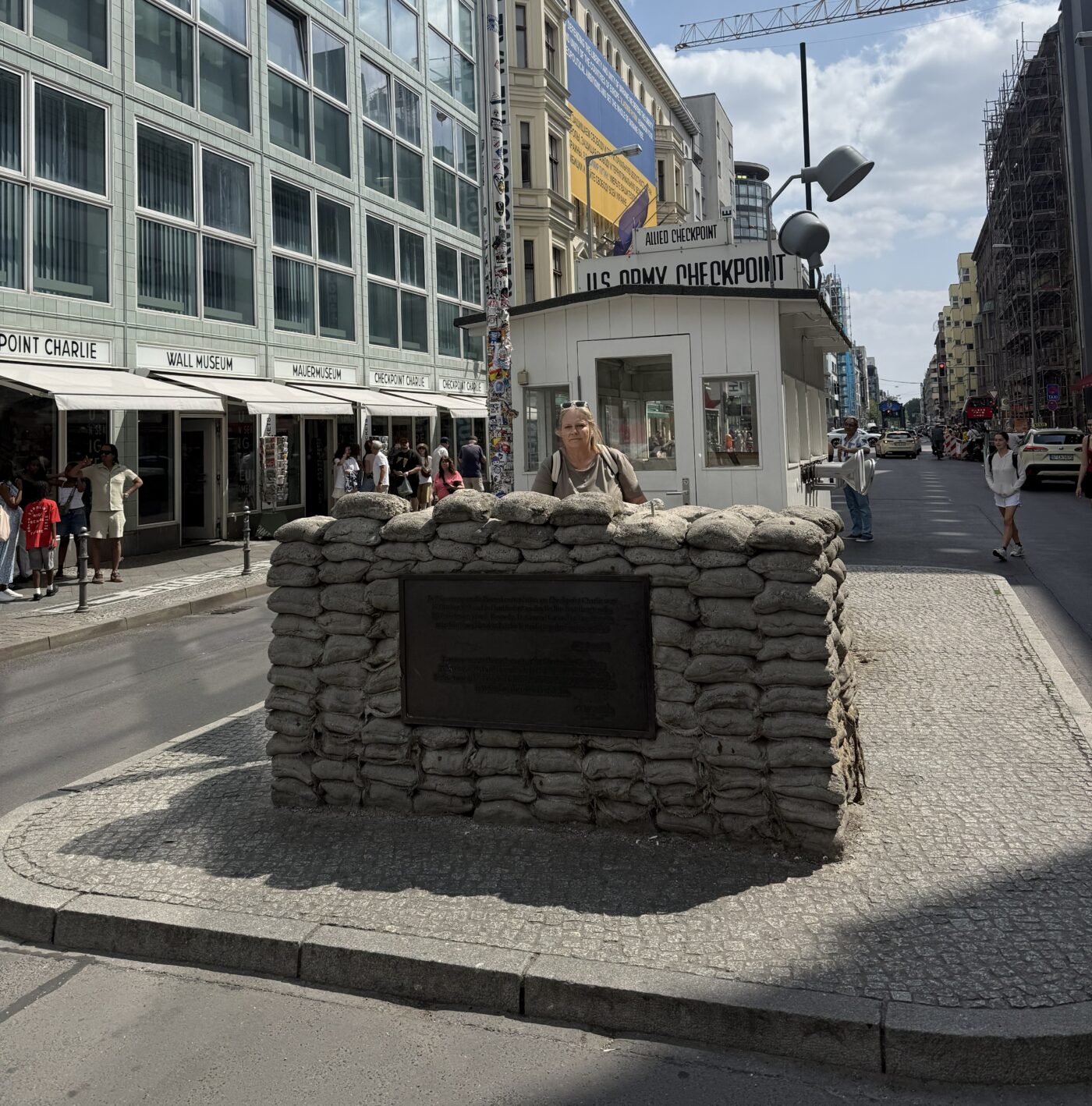
My wife was born in Berlin. Her dad was in the US Army and guarded Checkpoint Charlie as the Berlin Wall went up. Her family was stationed in that divided city, and she had not been there since leaving before her first birthday. Seeing Berlin through her eyes on a personal level while discovering the global role the city plays in world history was a fascinating juxtaposition.
We were excited to plan an extended stay in Berlin. In the days before departure, I reveled in some classic Cold War fiction by John le Carré, Len Deighton and Christopher Isherwood to set the stage.
Both of us grew up during the Cold War, so we were attuned to the intriguing setting of Berlin, a city split into quadrants after World War 2. The city thereafter had a Western presence (American, British, French), but it was surrounded by the new bad guys…the communists, mostly in the form of the USSR. On August 13, 1961 the Berlin Wall was erected by East German soldiers, to keep people from flowing to the West. Berlin was like an island inside of East Germany, almost inaccessible from the West. It was somewhat similar to Cuba, a communist outpost only 90 miles from American shores.
Today, most everyone is familiar with the gradual crumbling of the USSR, manifested by the razing of the Berlin Wall. Whether it was Reagan exhorting Brezhnev to “tear down that Wall” or David Bowie playing in West Berlin with his speakers pointed into East Berlin, the Wall came down. The lesser known story is actually more interesting, and can be found in a wonderful documentary called Free to Rock, which convincingly describes how soft power, led by Western music, was the most effective catalyst in dissolving the USSR. We rewatched the film before we departed.
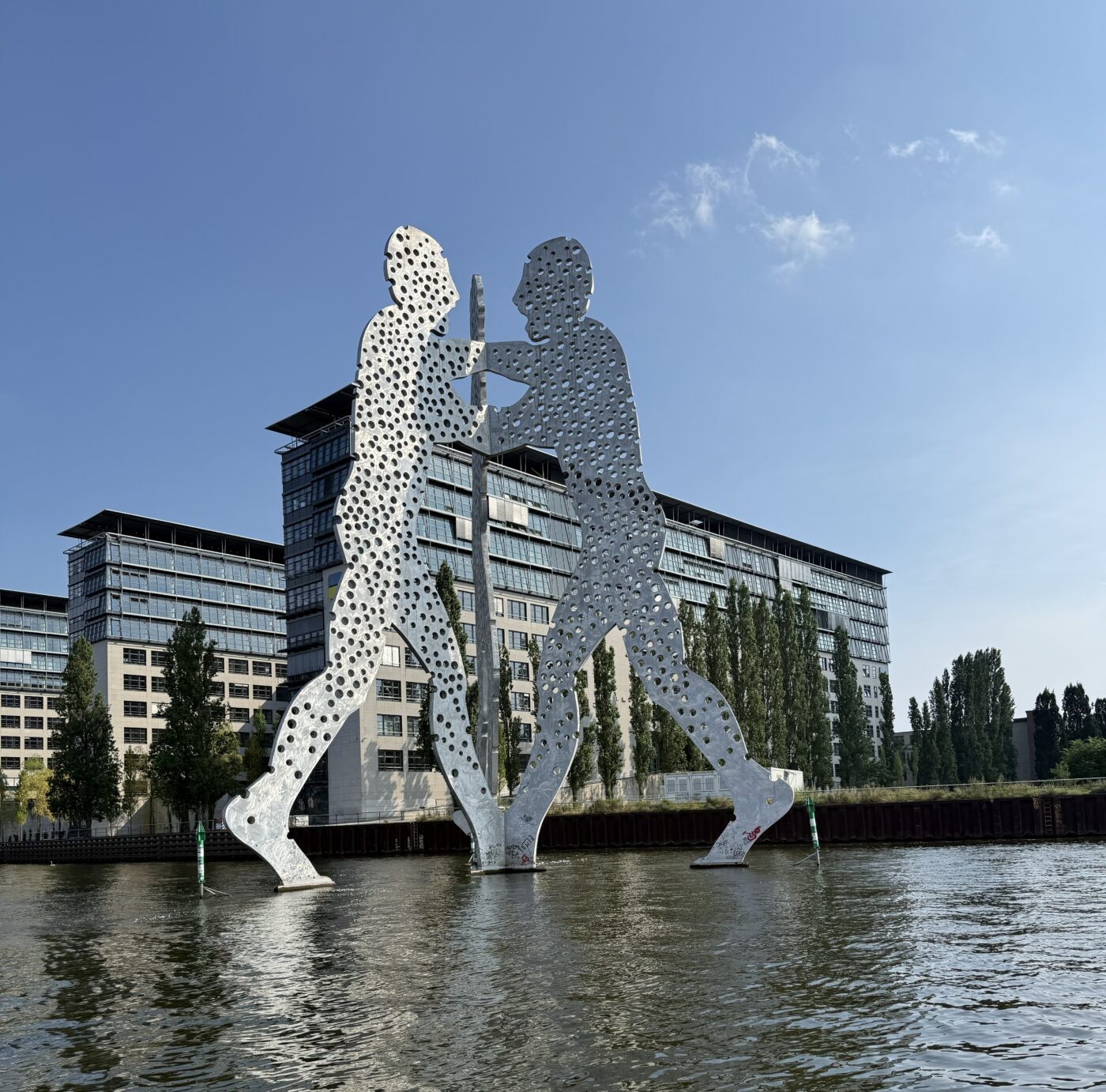
A boat tour is always a great way to get the lay of the land in a new city, and Berlin is no exception. The Stern + Kreis tour on the Spree River is enjoyable, but I fear we missed several points of interest. The handheld audio guide would be better designed if there were some kind of an alert when the recording sporadically starts (holding the unit to your ear in between tour highlights is poor design).
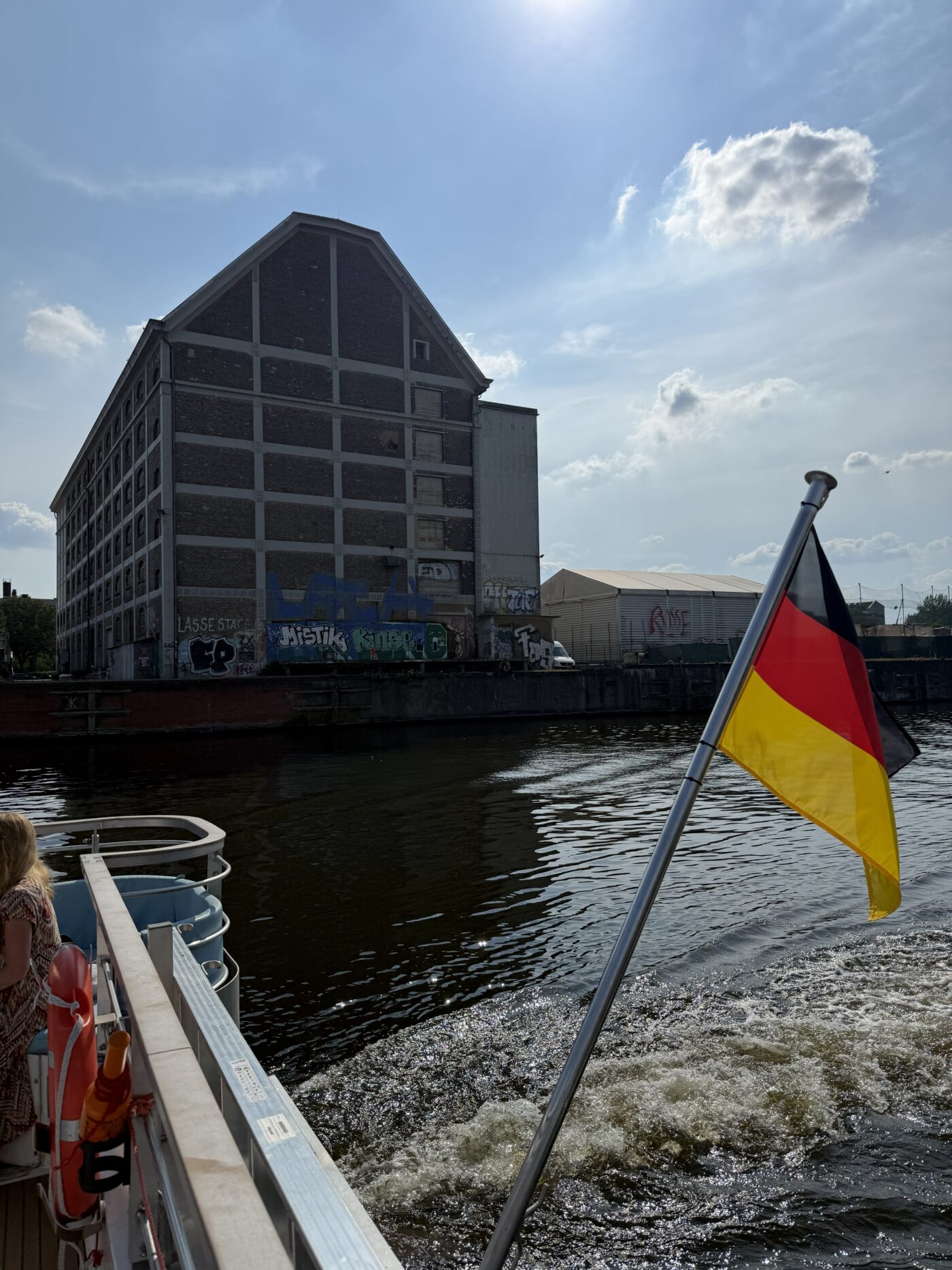
But I was extremely glad that I did not miss the now decrepit Victoria Warehouse (on Köpenicker Strasse), which once originally housed a king’s ransom of what the Nazis called “degenerate art” and what the world then and now understands as a high point of Western painting: Chagall, Ernst, Kandinsky, Klee, Matisse, Munch, Picasso and Van Gogh. My jaw dropped as we drifted past the building, contemplating what had once transpired.
The Spree is not a very grand river, of course nothing in Europe beats the Thames, the Danube or the Seine. The Spree is not sufficiently robust to be used for any kind of commerce, which always humbled Berlin’s growth economically as a national economic force. Indeed, to this day, if you extract Berlin from Germany’s GDP, it would improve the national GDP.
A significant reason that Berlin is a drain on the rest of the nation is that the city has two of everything (galleries, museums, hospitals) because of it being a once-split city.
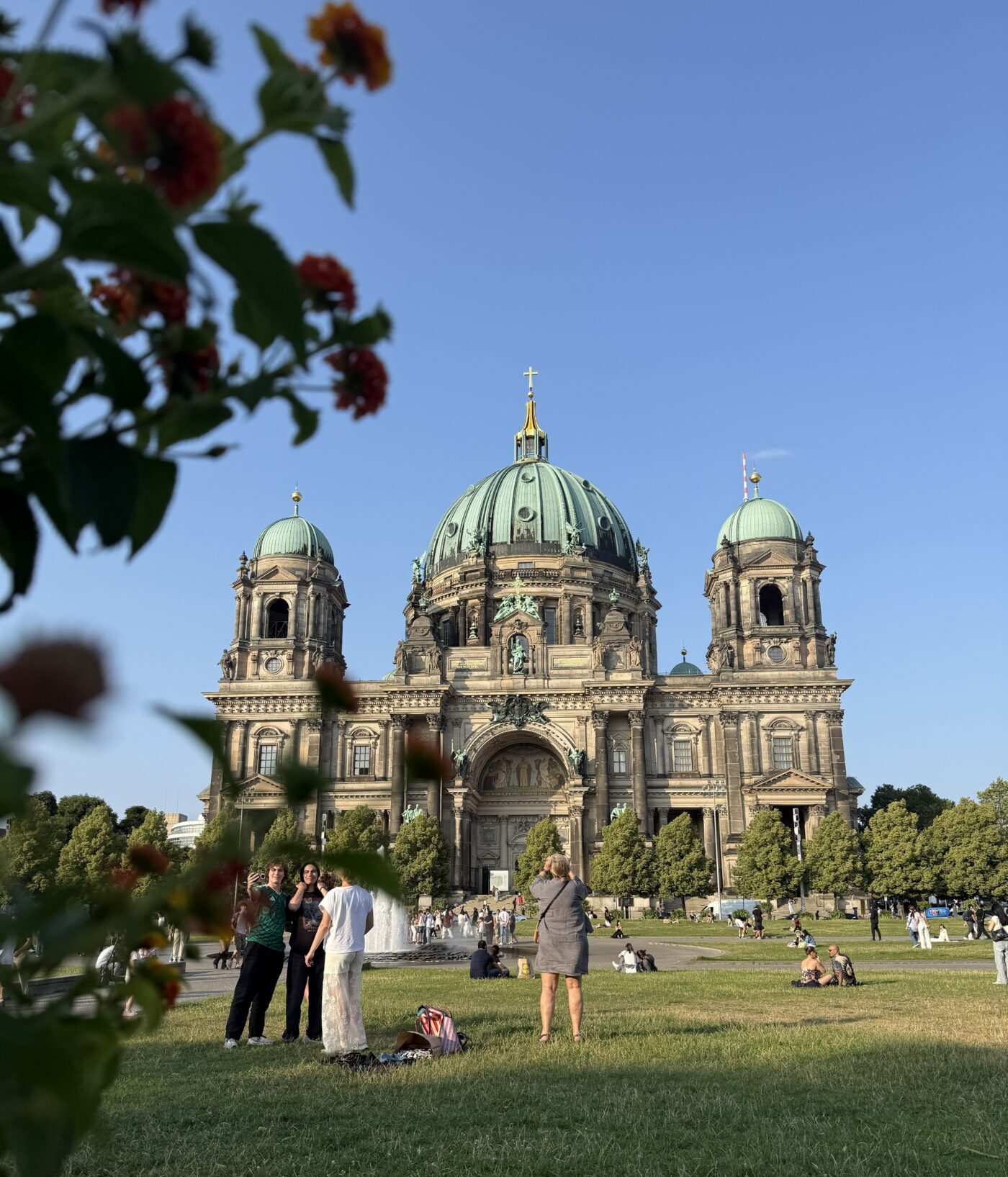
Berlin was built on a swamp; the first written record in Berlin was a dispute over a pig. But that swamp status kept buildings from growing tall. The top of the Berlin Cathedral (Berliner Dom) is hence one of the most favorable venues for a citywide view.
Years ago one of the things that impressed me in Havana is how they preserved the bullet holes in the Capitol building to help remember the revolution. In Berlin they have done the same. What you will notice is that all the bullet holes were shots coming from the east, as the Russians were advancing on the city.
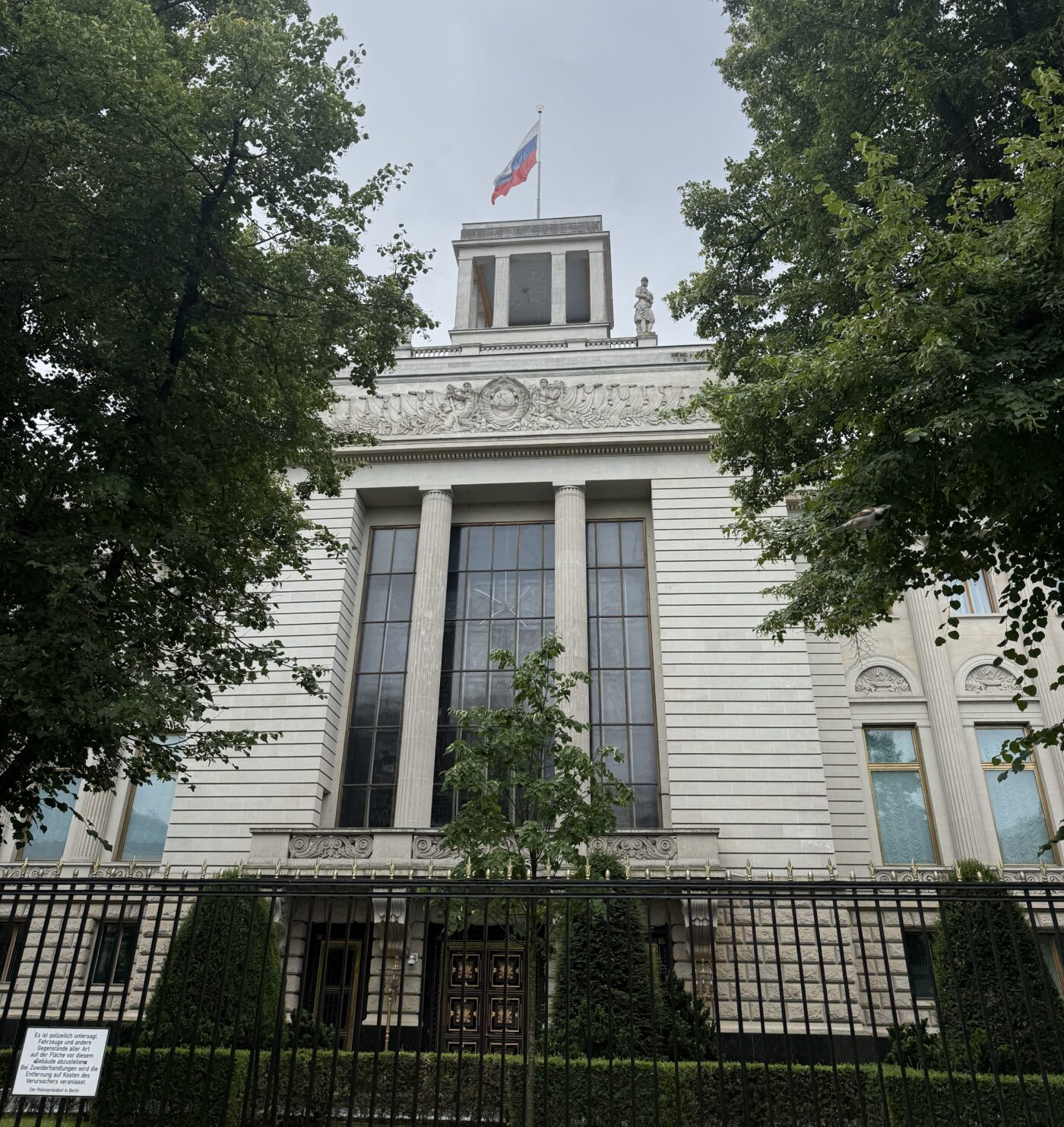
Indeed, the Russian embassy is one of the most impressive buildings in Berlin, because it was built in 1952 at the height of the Cold War in Soviet-controlled East Berlin. The political imperative was to portray massive strength. Today because of its war with Ukraine, the Russian embassy is nearly unapproachable due to the myriad protests regularly staged nearby. That said, I was impressed with the consistent presence of the Ukraine flag all over the city, from street corners to office buildings and everywhere in between.
A fascinating observation is that the closer you get to Berlin’s city center the newer the buildings, which is an oxymoron with almost any other city around the globe. We also noticed in Berlin more rainbow flags than any other city I can recall this side of San Francisco.
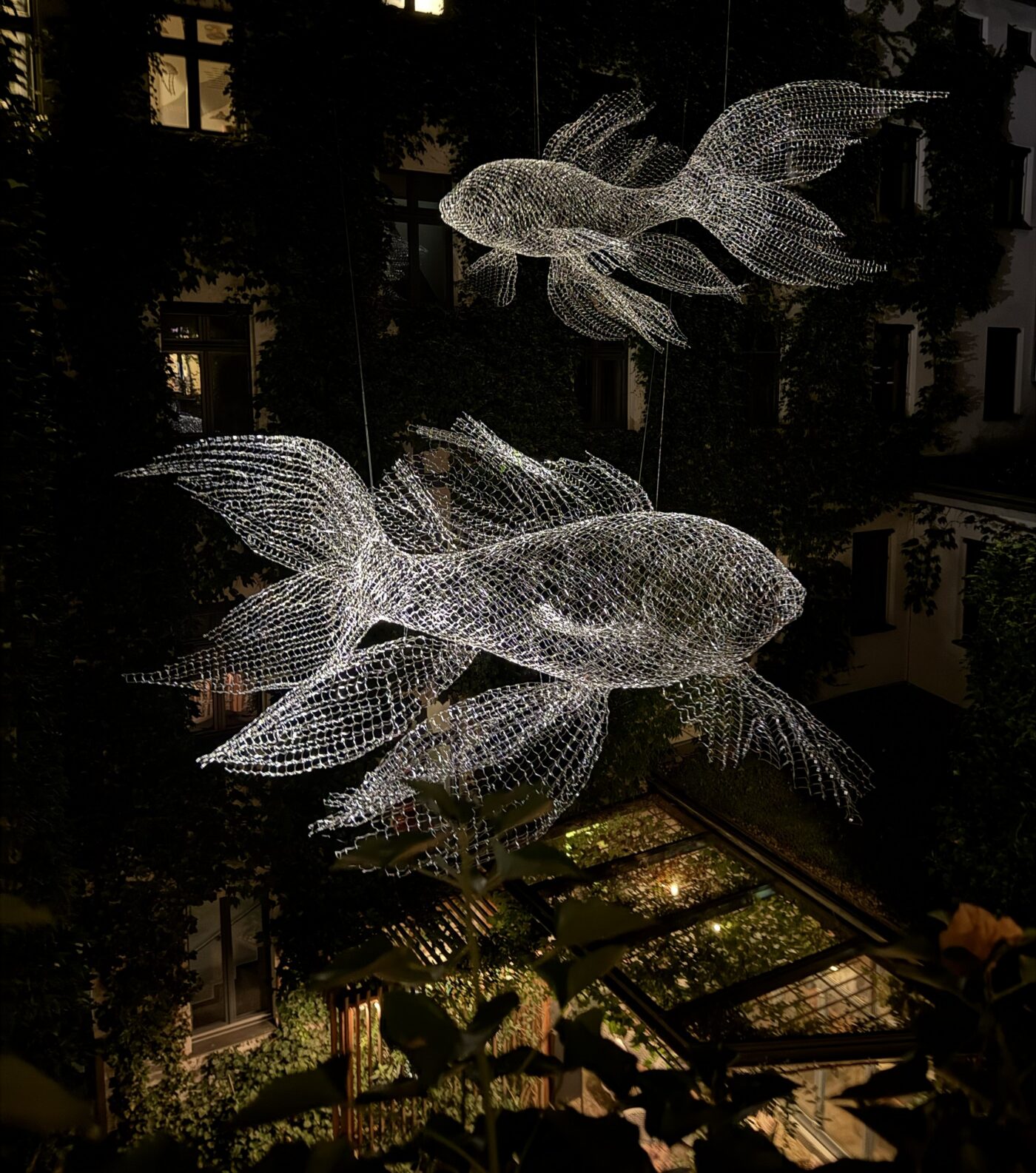
We chose our hotel well. The Circus Hotel is one of those places where the building and the neighborhood feel like part of the experience. Set in a historic 19th-century building at lively Rosenthaler Platz in Mitte, the hotel has a history that is almost as eclectic as its design. The property combines contemporary touches with an intentionally playful mix of furnishings, art and colors rather than the predictable uniformity of a chain hotel. Individual rooms have their own character. The lounge, library and courtyard were inviting places for us to relax after a day exploring Berlin. Even the practical details have personality: guests can choose from a selection of pillows, a small but appreciated touch for travelers like us who know that the right pillow can make or break a night’s sleep. Speaking of sleep, looking out our window into the courtyard at the floating fish sculptures brought a smile.
Breakfast is another reason to linger before we headed out: it was tasty, substantial and a very good way to start a day of exploring. More than anything, though, location is The Circus’s great luxury. The Rosenthaler Platz U-Bahn station is directly across from the hotel, putting the city’s integrated public transportation network at our fingertips; Berlin’s system makes it possible to travel on the U-Bahn, S-Bahn, trams and buses with the appropriate single-network ticket, making it remarkably easy to get around. The hotel is also within walking distance of Alexanderplatz, Museum Island and Hackescher Markt. And we saw that across the street the same company operates The Circus Hostel, offering an entirely different, more social style of Berlin accommodation.
The more lush part of Berlin is what was once the American sector. We were able to track down the house in which my wife’s family lived when she was born. Nearby is the fantastic Allied Museum, which is an incredibly insightful way to gain perspective on the city’s history. Our visit inevitably took us to Checkpoint Charlie, the site of several power play standoffs between the US and the USSR. Now, you can pick up all sorts of souvenirs; this is a relatively happy circumstance of a free market.
Invariably, as we explored the city we encountered Berlin’s role as the epicenter of Hitler’s Nazi activities. The city has done an admirable job of dealing with its past. Far from trying to push that era into the distant past, Berlin acknowledges what occurred and celebrates the steps it has taken to learn from history.
Standing in a fairly decrepit car park, we experienced perhaps the most telling aspect of Berlin’s strategy. In that nondescript unpaved lot we were standing above Hitler’s Bunker. A city resident indicated that the only thing that would make the site more appropriately derelict would be adding a toilet. But he explained a toilet would require assigning an address. Instead, the site of Hitler’s Bunker and cowardly suicide has no address and it’s not easily found. This is perfectly appropriate and an indicator of how thoughtful Berlin has been about dealing with its past. No memorial, no landmark. Simply an opportunity to investigate and further contemplate.
The excellent days we had in Berlin presented a fascinating juxtaposition for us, and the same is likely regardless of what lens you bring to the city.


