


THE VISIONARY OF PERU
Alfredo Ferreyros started Explorandes 51 years ago, bringing trekking to Peru, perhaps the most trekkable place on Earth
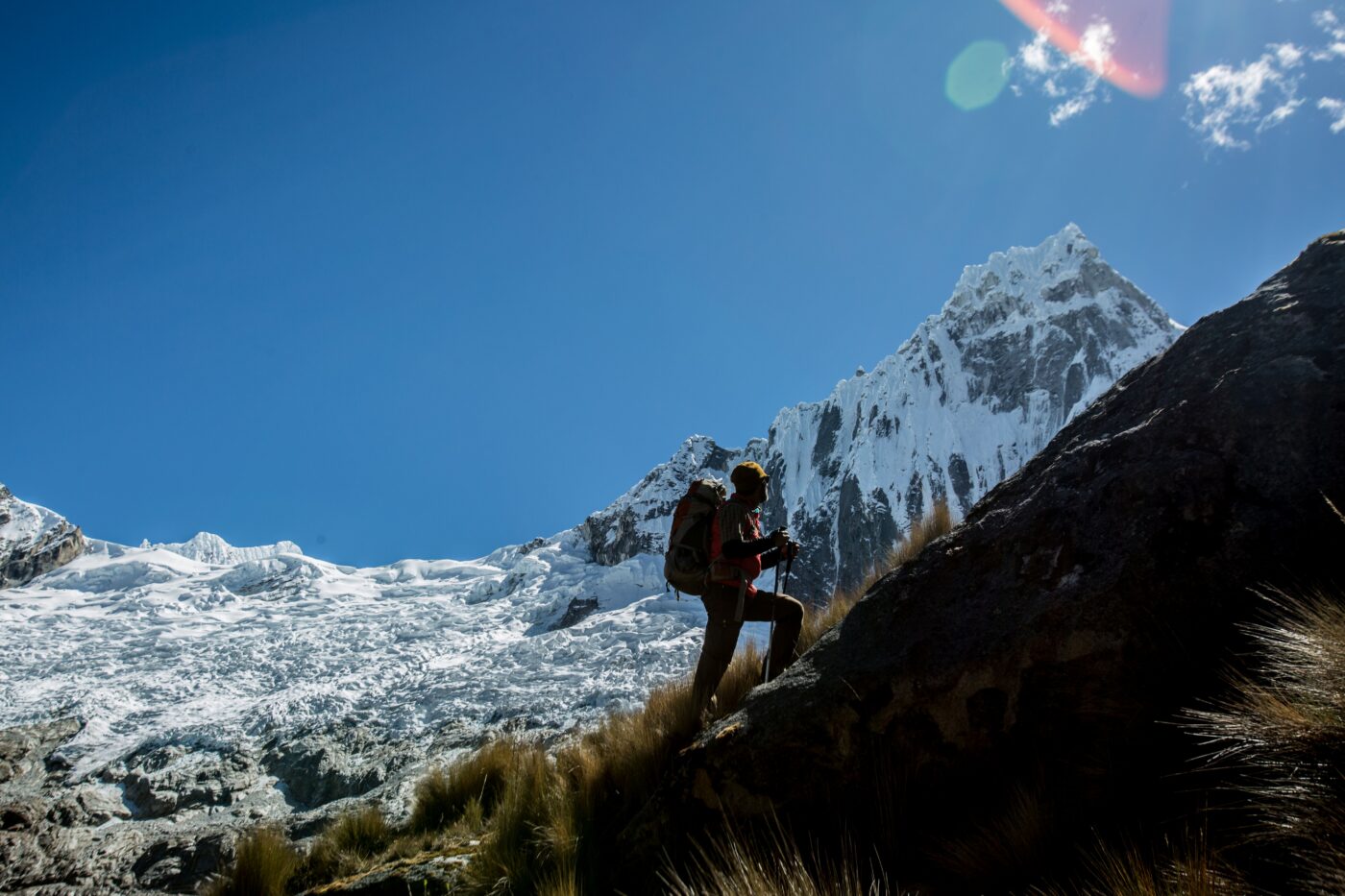
Adventure travel takes many forms, but trekking through the Andes in Peru (even just going to Peru) is certainly one of the most fantastic.
It’s not for everyone. Most people would find the distances alone walked difficult on flat land, but in the Andes there’s the high altitudes to factor in. You should be fit to go on one of Explorandes trips, you certainly will be by the end.
But this is not just about trekking, Explorandes trips are immersive, bringing you into villages and communities you wouldn’t come across otherwise, and exposing you to the real, unspoilt Peru.
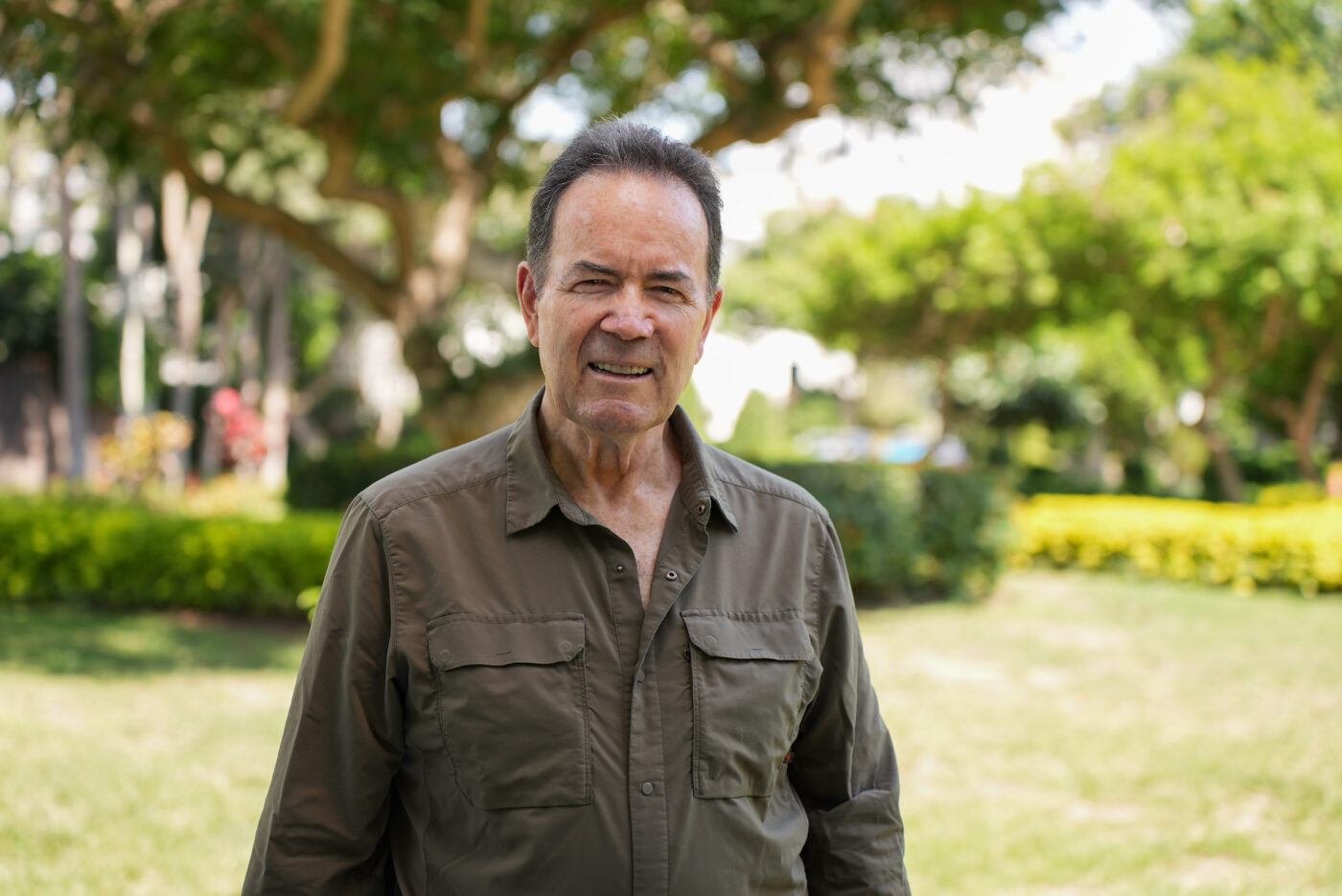
I spoke with Alfredo about the incredible journeys he offers, and his own incredible journey.
How did the company begin? What was your vision?
I came back from studying abroad in England and the States. I went to Cornell University to study agriculture. My family had a farm here. In the middle of my studies, we got expropriated by the revolutionary government, so we lost our farm.
I started to look into what else I could study. I ended up taking a course to learn Quechua, which is a native language here. When I got back to Peru, I ended up driving to Cusco and settling there and finding a place that was central to tourism development and had all sorts of opportunities, because in the ’70s, there were hardly any asphalt roads in Cusco.
The farmers there had been affected by the agrarian reform. There was an upheaval in the city. People were moving to Lima. I came upon all these different communities with their textiles and their beautiful crafts they had taken with them since the Incas.
I was intrigued that the tourism in Cusco only did museums and ruins and didn’t really take into account the people and culture. I’d done some hiking in the Alps and in Vermont, so knew about backpacking and the public that did that tourism. I saw an opportunity to start a trekking company.
People handling traditional tourism thought I was crazy. “Americans aren’t going to come to pay for walking.” I was this crazy Limeño [a resident of Lima] who has come to Cusco to take people walking to Machu Picchu.
There was a company in the US now called Mountain Travel Sobek. They were the first to initiate treks in Nepal and Argentina, Patagonia. They introduced, I think, trekking into the US market. You had mountain guides to trek through the Himalayas, Mount Kenya, and other areas.That’s what made me come up with the idea of starting a trekking company.
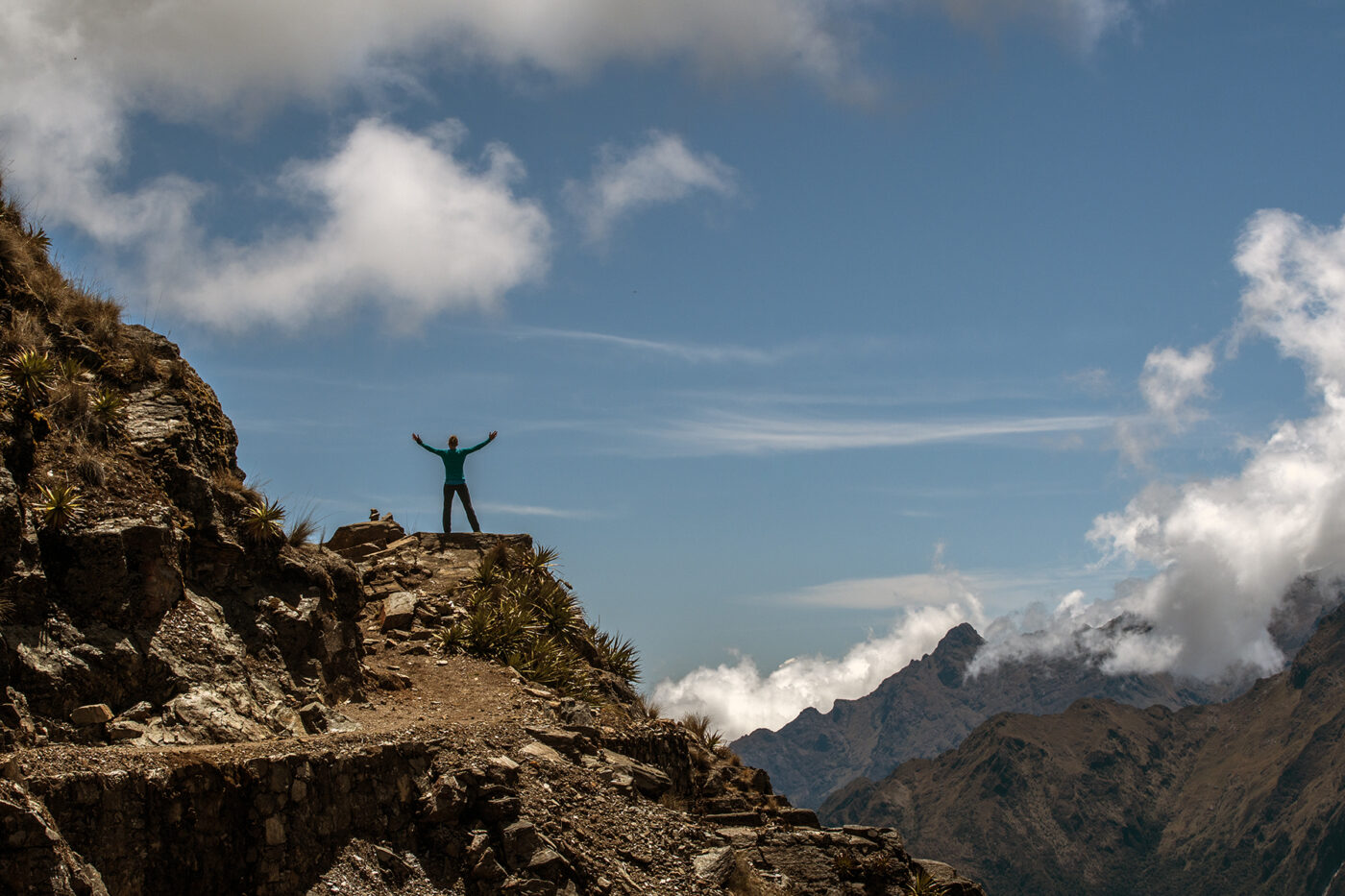
The first few years, we had very few clients. We did scouting trips and documented altitudes and mileage on the trails. There wasn’t GPS. We had to measure the pressure, the distance, and orientation, look at maps. It was all very exploratory in a way.
Anyway, I started putting together the itinerary. From the Swiss and German embassies, I got some company names, and I mailed out what looked like magazines that were just typed up with itineraries. Some hit the spot. We began to get tour operators coming down to Cusco to check out the itineraries.
How much is exploring the local culture an important part of what you offer? Obviously, no one’s coming just to walk.
Well, it’s become important because people are looking for that experience, they’re looking for cultural interaction. They want to know how people live. The type of people that come and do adventure travel trips are more into how people live locally, aside from trekking. We have what is called Community Tourism, individual days or packages taking you to different communities where you can live with them for a day, work the fields with a foot plough or harvest potatoes, or whatever you want of the activities available. People looking for that authentic experience. That’s what we have a lot of in Peru still.
51 years ago, not a lot of people really knew where Peru was or much about the culture. What was your hope?
From the beginning, we worked with the communities we passed through because we thought we should benefit the communities whose land we traverse. We felt it was important to train locals so that they knew how to drive mules or donkeys, how to cook, how to do portages on the high mountains. We learnt a lot from them, in terms of herbal medicine and how to treat patients with bone problems, twisted legs, or whatever accidents you sometimes get out in the field.
The trekking day usually is between six to eight hours. You start off early, you have a relaxed walk. It can be sometimes strenuous because of the altitude, but we usually pace them out so people have time to take some time when they reach villages and communities or there’s beautiful scenery to photograph
Many tourists that came had no idea that we had such cultural traditions, populations.
What makes it easier is the fact that our dry season, from April to August, is also harvest season, where a lot of festivals take place to thank the gods in the mountains for the harvest and for the agricultural production of the year and the season. We always try to make the treks go through areas where the festivities are going on, to participate and integrate everyone into the culture.
Do you operate in all four seasons?
We don’t recommend February because that’s the heaviest rainy season. It rains almost every day. It becomes a muddy experience in certain areas. We try to keep people away from the end of January, February, first week of March. With a cloudy and rainy day, you don’t get to see much.
What do people experience that they least expect? What surprises visitors most about Peru on your trips?
Well, one of the things that they are astounded with is the level of service and the quality of the food.
In a restaurant or on the trail?
On the treks. When we’re talking about service, we’re talking about the adventure part of it. I tell you, everybody that comes and does a trek with us needs to acclimatize, at least one or two days before they hit the trek. That entails going to the ruins, hiking through the cities and villages, and getting acclimatized.
Cusco is at 3,460 metres, which is about 11,000 feet. People have to take it easy when they get in. It’s a process. We often take advantage of taking people to the sites, the ruins, and the communities where people are selling their handicrafts or whatever. An immersion in the local culture via that experience.
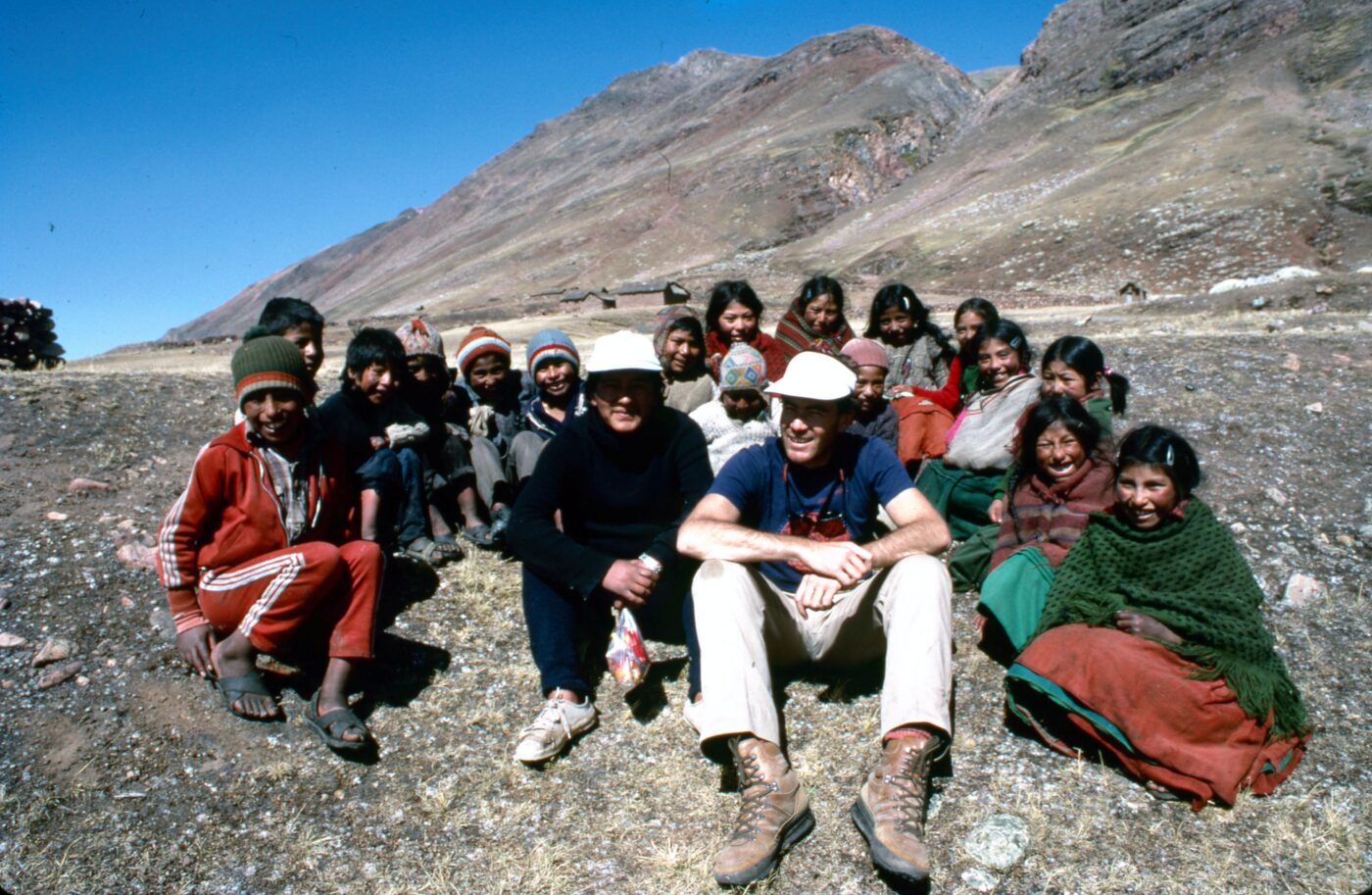
Aside from that, when we get out into the backcountry, where there’s very little population, the people still live at about 4,000 metres. When you get above that, 4,200, 4,500, even 5,000 metres, it’s just grazing and pasture of llamas and alpacas. There’s cultivation going on. You interchange mostly with the shepherds and herders at that altitude.
Do all these trips originate in Cusco?
No. We have an area in northern Peru called Huaraz, or Ancash, which has a national park with Huascarán mountain, the highest peak in Peru. In the Andes, the second-highest peak. It’s a national park about 100 kilometres by an average of 4 kilometres wide. It has various ecosystems in it, but it’s basically crisscrossed by 5,000 tall mountains. 120 above 5,000 metres.
It’s in the range of the spinal cord of the Andes. You get a chance to cross over passes and do multi-day excursions. You can do treks of even 20 days going through the Cordillera Blanca, Cordillera Huayhuash. We’re the only adventure tour operator that has an operation in Huaraz.
What’s most spectacular about a trip through the Huayhuash Mountain range?
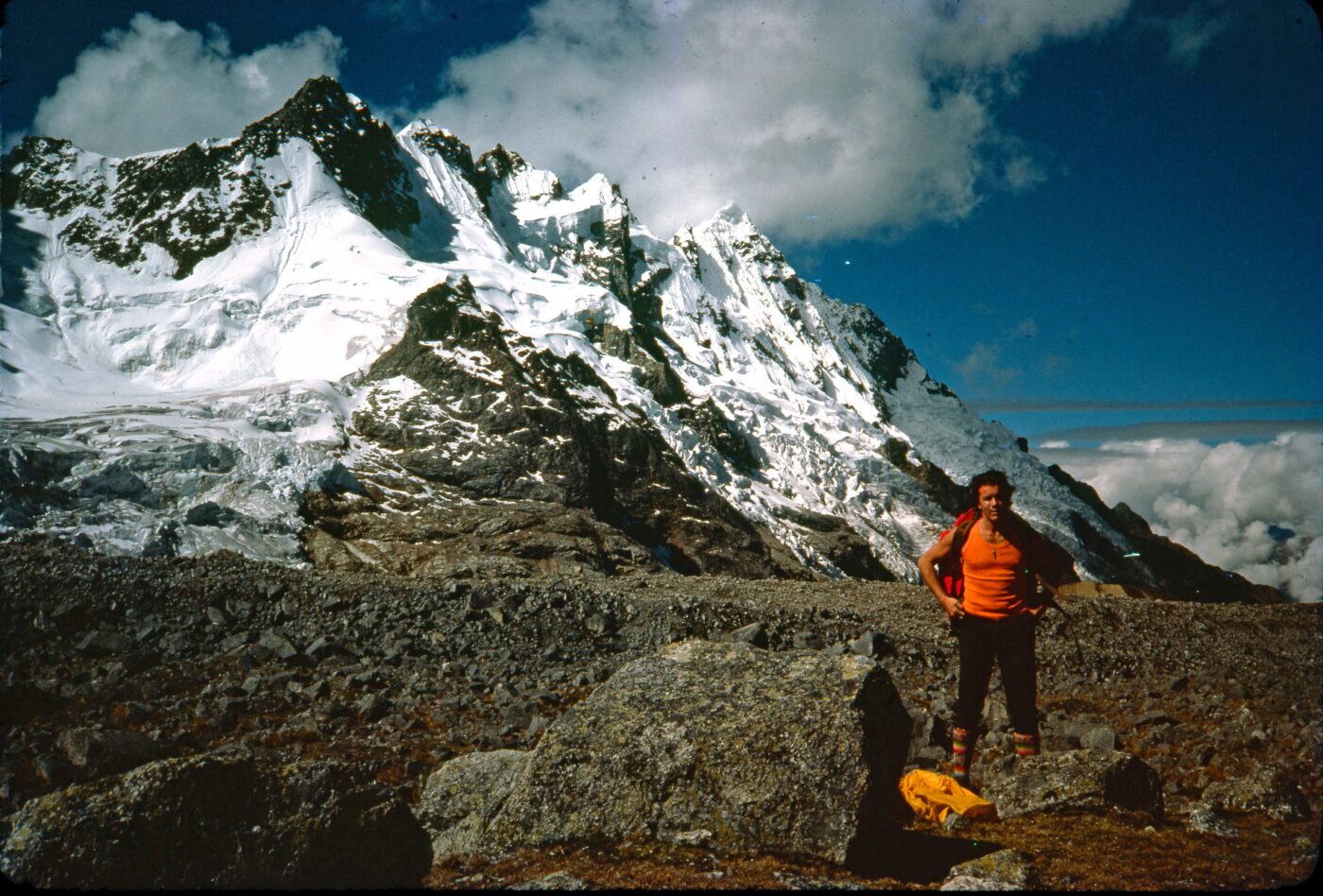
It depends on what level you start. If you at a low altitude, you can still see rainforest or cloud forest forming. As you get higher, you get into more a steppe, a pampa landscape with rolling hills. After you’ve finished the rolling hills, you get to glacial lakes. Glacial lakes are usually below snow-capped mountains that rise up like teeth trying to bite the sky.
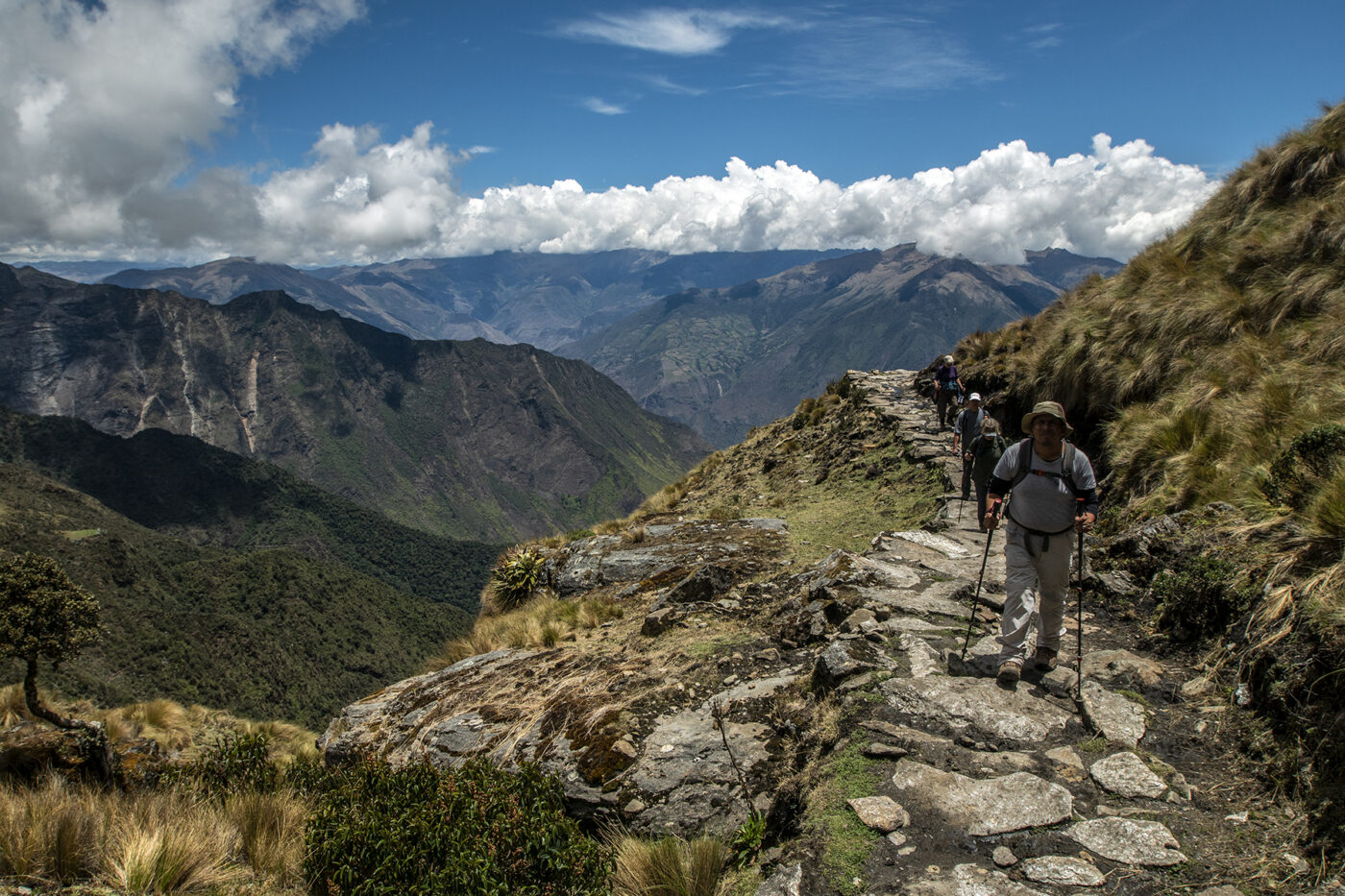
It takes you through various landscapes. The challenge is to do passes every day. In the Cordillera Huayhuas, where you have seven passes, you go from 4,000 to almost 5,000, and then down again to 4,400, and up again. Every day you’ve got to go through a pass. You have these cairns in the passes where people deposit rocks as a sign of good luck on the trip. At these cairns people pray when they get there that they’ve gotten so far, and then they continue.
In this particular range, the Huayhuas, a political division divides the range into three political areas or different provinces. There’s a lot of rustlers. People who steal cattle from each other. You get a lot going over the passes to try to steal the cattle from the neighbour.
Initially, they thought we were rustlers and got their shotguns out because they didn’t know what we were doing, because nobody had seen a white man coming through those passes in centuries.
Most of the summits have been climbed in the 1940s and ’50s. There was a lot of interest in glacial dynamics and comparing the Andes to the Alps and all that.
There was a lot of scientific work going on after the Second World War. The mountains were well mapped by the German expedition that came in the ’50s. But obviously, it wasn’t fashionable. Nobody wanted to take a vacation hiking for 10 days or 15 days. There was no market for it until after the Second World War, when all this equipment began to be available because of the development of materials, like rafting boats and things like that. It all came from naval design.
What is special about the Inca Trail?
Machu Picchu is a mystical location. It’s like a crossroads of two main rivers that feed the Amazon basin. It must have had some significance for the Inca who reigned in those days. Inca Pachacutec was a builder of the site. It was important, the water, the sun. They had built all these hydraulic canals on the site to drain the water. They built a citadel on them. It’s been found that on the citadel, they had a lot of women taken to be probably made priestesses of what were called, in Inca language, Ñusta. It was a sacred place where people would come to pilgrimage once a year to thank the lord for water granted for the agricultural purposes.
I think it was really designed to fit in with the landscape. You start at about 2,800 metres. The second day, you go over 4,220 metres. Then you go down to 1,800 again. Then you go up to 2,800. It’s up and down. It has a wonderful view of the snow-capped peaks surrounding the area, mostly what’s known as the Cordillera Vilcabamba, which encompasses all the peaks from the Urubamba Valley, the Sacred Valley, to the northern part of Vilcabamba, where you have many sites. It’s a network of trails.
Rather than think of the Inca Trail as a unique trail, which it is in terms of landscape and experience, because you go through different archaeological sites, it’s a network of trails joining communities all along the Andes.There’s 40,000 kilometres of these trails.
There’s also the Qhapaq Ñan. Martin Romero, my partner,has recently been exploring what we call the Qhapaq Ñan, or the Great Inca Trail, which is 10 metres wide in places. It’s like the highway that joins the spine of the Andes.
What’s your favourite trip that you offer?
Well, something around Cusco, where you familiarise yourself with authentic local cultures. Then, for trekking and rivers and everything, I think the Northern Cordillera Blanca. A lot of people prefer the White Wash, because it’s most spectacular in a way, but the Blanca has different peaks within walking distance. There’s peaks for every taste and knowledge of climbing. It really depends.
If someone wants just a really great food tour in Peru, what would you do?
Take them to the three regions Peru has.
The rainforest area of the Amazon, which takes up 60% of Peru’s lands. The local food there is limited because of the weather and the fact that it’s mostly wild. You get local food, fruits, and vegetables, but not as much of a selection as in the Andes. Then you go up to the Andes and try out the potato varieties, the meats, and even llamas and alpacas. They even offer guinea pig, which are very well done.
In the Andes, we have this huge, giant corn called the “Corn of the Incas”. There’s very unique varieties of cultivated food.
Then you go down to the coast, where we mostly have fish and the different kinds of molluscs and crustaceans that we eat here. They’re made in Ceviche. They’re influenced by the coast, and the Japanese and Chinese that were brought here after slavery was abolished. They were hired, and they brought in the whole Asian side of Peruvian cooking.
We have a lot of Italian food here. You can find here any taste available. We have the second-largest Japanese community after Brazil. The Chinese, I think we’re second after San Francisco.
Apparently, you’ve just published a book.
Fifty Years of Adventure. We basically recounted what tourism was like 50 years ago and what it’s like now, and how some activities started, like rafting, by poor Americans that came down here with a raft to look at different rivers. They picked the Urubamba River, and that’s how river rafting started. Things like that.
We tell stories of what’s changed and what’s improved. The generation of educated youth is frustrated with the way politicians are dealing with issues here. A lot of Peruvians have moved on to other countries. Some go to the States. The preferred spaces for educated Peruvians are Madrid and Barcelona. We’ve had, in the last five years, 400,000 young, employable, university-educated people leaving the country for a better future elsewhere. People are a little depressed, so we thought we’d bring out a book that would give a more positive angle of how things have been going in Peru.


