


THE LOAD LESS TRAVELED
The silent plight of lost luggage, based on the true stories of an airport baggage handler
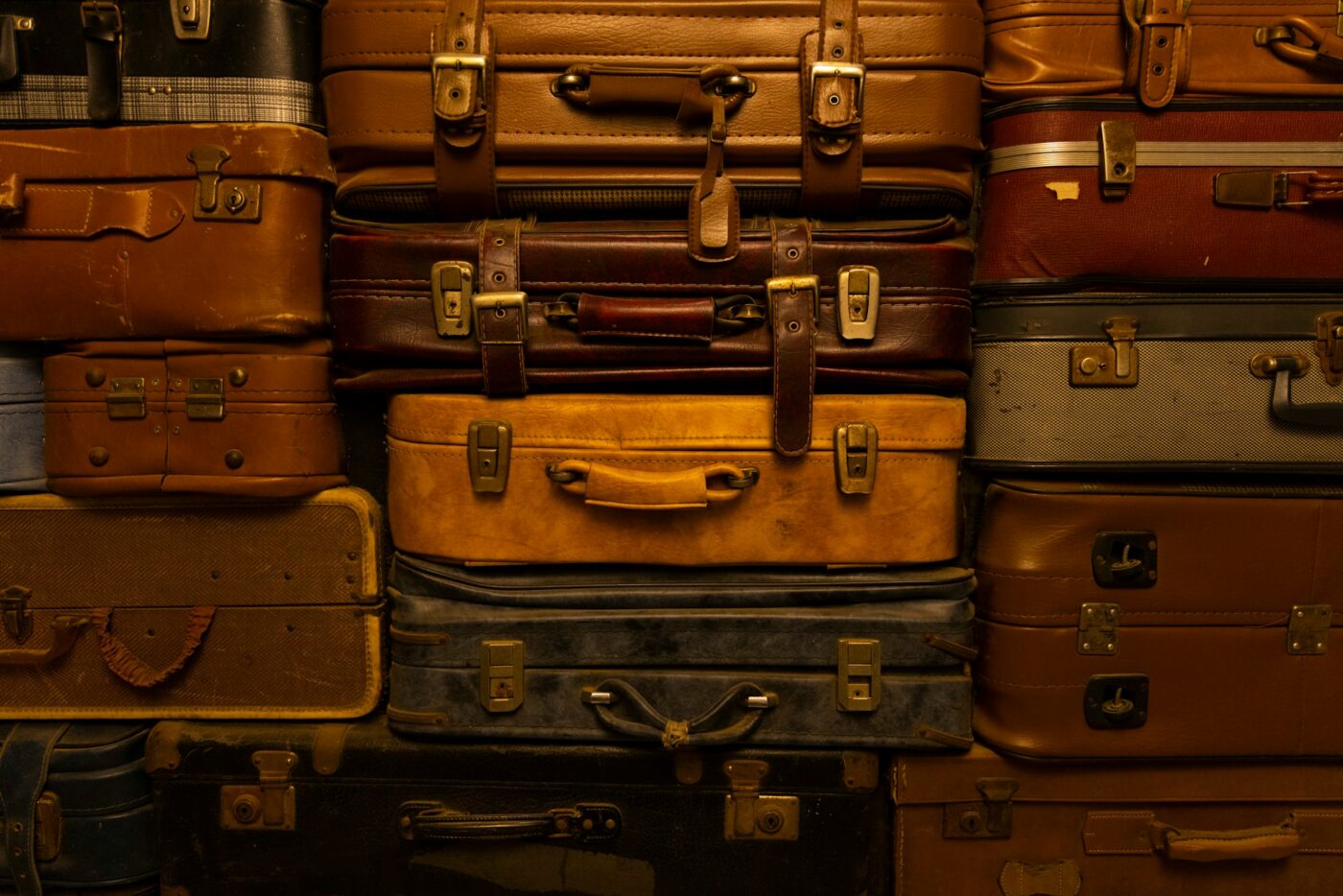
The second most jarring airport realization, second only to watching your passport speed off in a cab, is discovering your roller won’t fit in carry-on. When forced to check an oversized suitcase we complain about fees, but the subconscious issue is surrendering the portable you, the absolute basics needed to look, feel and smell like yourself.
A forced bag check should be a sobering moment, like watching your inner child leave for its first day of school, but it’s the airport and everybody is late, so check the zippers, tug the lock and sign here. Off it goes, down the conveyor belt, through the hanging rubber strips and into the metallic nether regions of the airport. But then where? It all depends on your location and your itinerary. To best utilize our sources, let’s say you’re traveling Denver International to Moscow Sheremetyevo, your itinerary includes stops in Dallas Fort Worth and Istanbul, and your carriers are American Airlines to Turkish Airlines to Aeroflot, the largest and oldest airline of the Russian federation. Fasten your seatbelt!
GONE VOYAGE
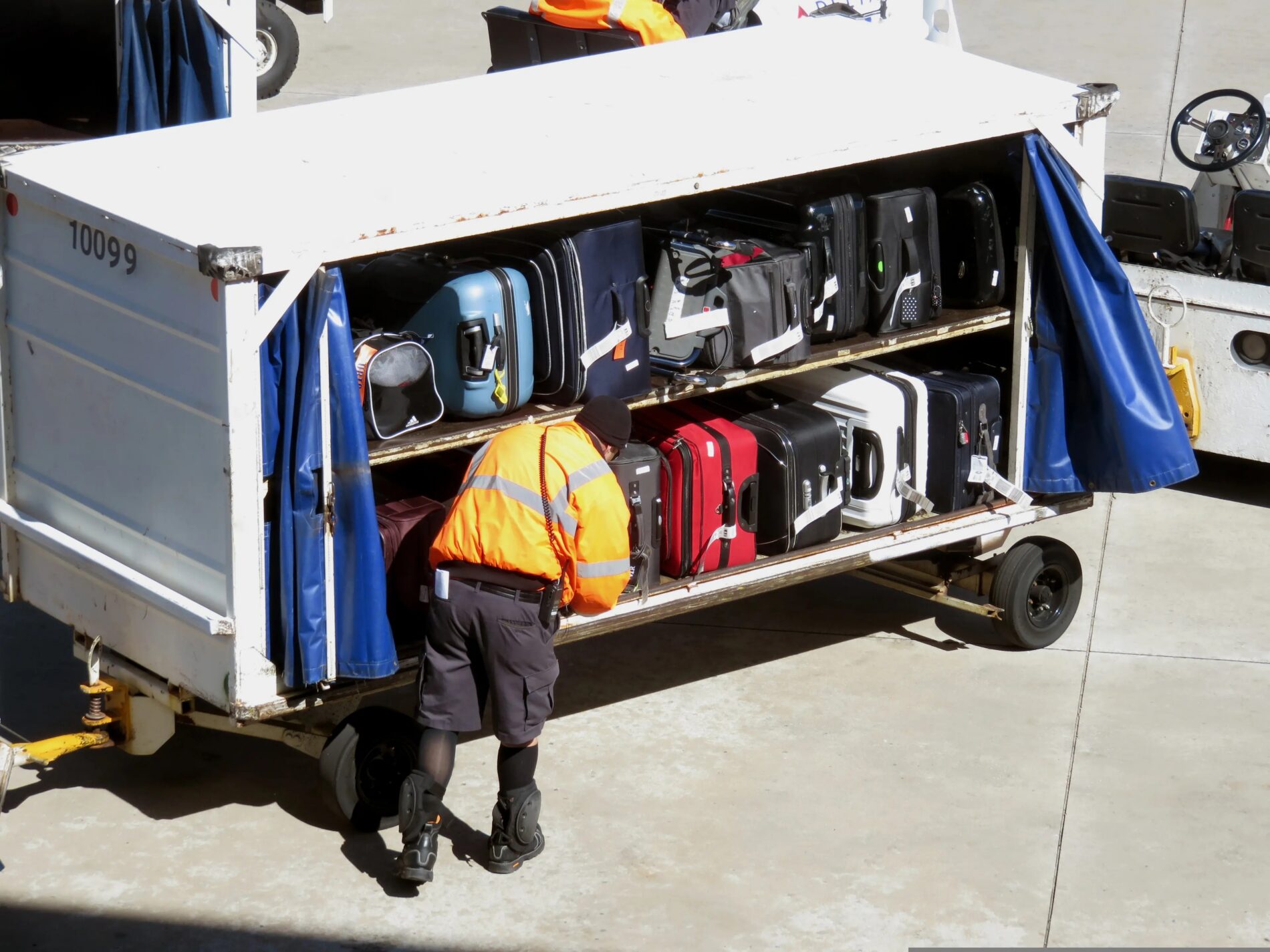
Our story begins backstage at DIA, where a venous maze of factory conveyors speed suitcases toward larger, wider conveyors. From the catwalk looking down, your blue aluminum Samsonite rides the far-left limb in an inbred family tree of belts. Where lanes converge, individual yield gates serve as physical stoplights, raising and lowering at even intervals, guiding bags towards TSA scan tubes. In a nearby baggage control room, eagle-eyed screening officers adjust focus dials and study rows of monitors displaying x-ray and CT scans. Should an officer detect a potential explosive device, or any other curiously dense item, they may divert the bag to a TSA extra screening room for an individual scan. Very few bags are diverted, and less than 5% of diverted bags are ever actually opened, though according to a baggage handler friend of ours, clunky laptops, Tupperware jars of ethnic food and red wine bottles have all drawn TSA suspicion in the recent past. Today in Denver, your bag arouses no suspicion.
OUT OF HERE
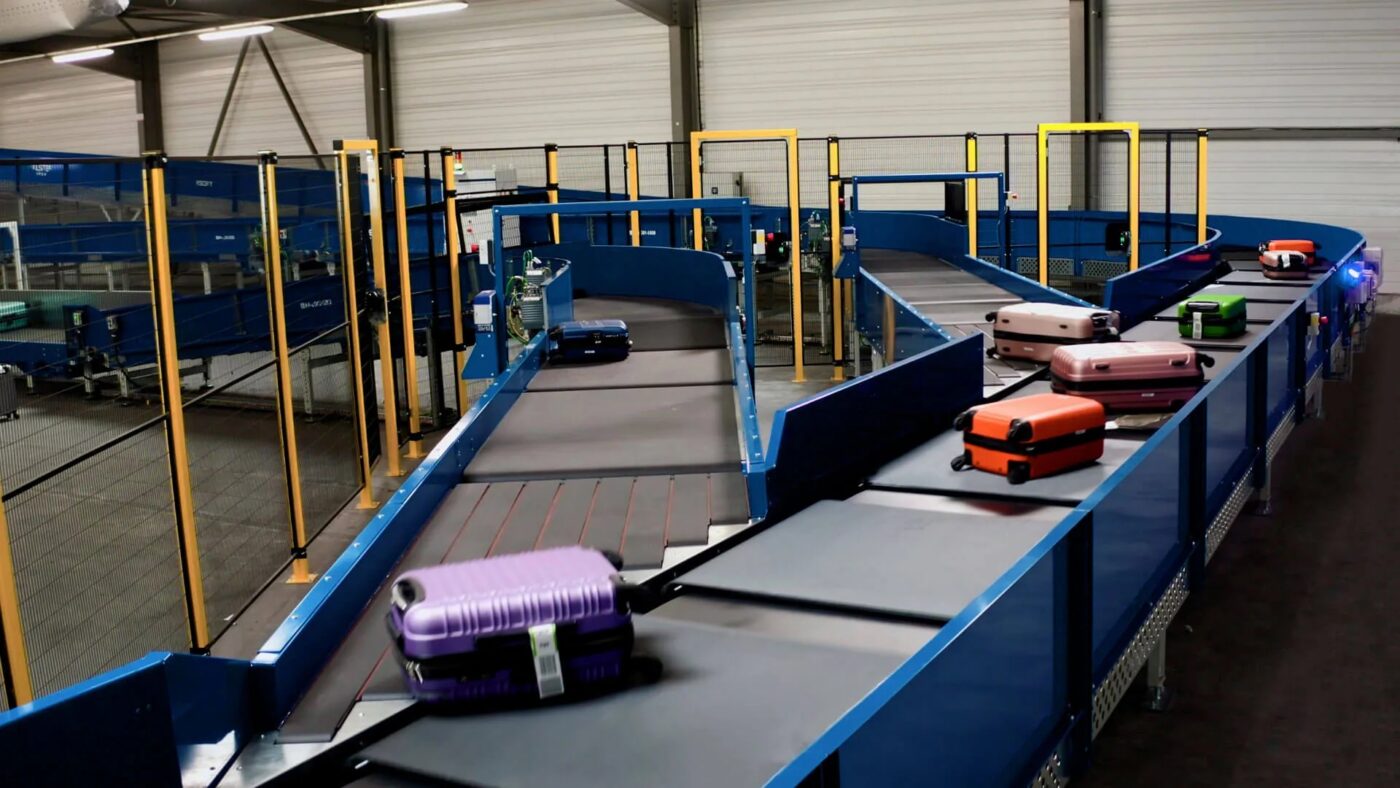
Once through the tube, the conveyer takes a downward alpine angle and draws your bag toward the mouth of an aggregator, where it jostles like square sperm against other approved bags from separate channels of the belt labyrinth. The bags collate, enter a chute, and slide one-by-one to a ground floor rotary flanked by luggage drivers, gloved union men with broad haunches who have learned to read lips well. At high speeds they scan QR labels and barcode tags and heave rollers onto two giant golf carts. One cart is marked “Hot”, indicating the luggage it holds belongs to a flight departing in less than an hour. Hot luggage is driven in a straight line to a departure gate where it is fed directly into the belly of the plane. The other cart, marked “Cold”, is full of rollers bound for flights in the non-immediate future. Cold bags are ferried to a secure holding area to await eventual load-in. As both carts near their capacity, the rotary stops and a siren sounds. Both drivers pull nets and straps over their baggage, drop their goggles on, tighten their ear protection and peel out.
OUT OF PLACE
One continent later, at the Sheremetyevo Aeroflot baggage claim carousel, kids cry in four languages and rappel down their parents’ pant legs. It’s been forty-five minutes with no sign of bags. Adults stare through dying phones, comparing their travel insurance policies to worst-case scenarios. Suddenly, a motor drowns the children’s screams and the ramp kicks on. Endorphins surge, the room resurrects, and at last, down the slide, onto the conveyor, the checked bags return. Some greet owners looking just as they were seen last, some return with fresh beauty marks, though yours, your blue aluminum Samsonite, must still be chatting up that beautiful young flight attendant. Time crawls, the crowd thins, and as the carousel slows to a stop, you’re left holding nothing but the realization that you’re the last one on the ride.

OUT OF HAND
Your bag has been “mishandled”, as goes the industry term for luggage delay, damage or loss. Your rolling portable you, your most prized personal nuances, a favorite tailored suit and your father’s 18K gold limited Swiss Omega watch, given to him on his 21st birthday by his father, all mishandled by a stranger. Several things may now happen, all of which are governed by the Montreal Convention, the international air transport treaty on baggage mishandling liabilities that Russia adopted in 2017 after releasing its grip on the Warsaw Convention, a nebulous, stacked-deck policy favoring airlines over passengers.
OUT OF SERVICE
Dazed, you approach the Aeroflot desk and spill your story. The agent’s instant diagnosis is diversion-related delay. Were this happening in Denver, the Montreal Convention would effectively require American Airlines to cover the cost of basic survival supplies during your wait, potentially to include a hotel room. But that’s the land of the free, and you are in Russia, the land of grey mystery Borscht, where persuading airlines to honor what “the Montreal Convention” requires of them is another matter entirely. Wait on your bag as long as you like—hours, days, generations—but you’re on your own Rubles for now. Hoping the delay is a brief one, you visit the automated currency exchange, buy some Unisom and a sleep mask from the gift shop, sprawl out on an empty row of Aeroflot lobby seats and have a dream about your father’s father’s $20,000 heirloom watch.
OUT OF COMMISSION
During your nap, if your bag were to be found gasping and bleeding on the asphalt of Sheremetyevo gate 8, a pair of luggage drivers with broad haunches who have learned to read lips well may decide to euthanize and divide it, and upon spotting your cedar watch box, realize they will be buying both Stoli vodka and baby food that night. In America, tampering with luggage is a federal crime. In Russia it is a measured option. Should conscience compel them to turn it in, with or without the watch, and were security to miraculously determine it belonged to the masked American snoring in the lobby, you may yet reclaim the corpse of your bag, along with a one-time compensation paid in vast quantities of “nyet” and “poka”. Tough times comrade.
OUT COLD
Surprisingly, were this Denver, a bag-damage scenario could suck nearly equally. Were your blue Samsonite to return bearing near-annihilative damage, compensation would still require proof of gross negligence on the part of American Airlines. All four corners completely inverted,a cologne bottle shattered, contents soaked in a fragrant designer alcohol—you really should’ve packed that thing securely. One wheel fractured, handle missing, a steaming crater impressed into its middle—prove your bag wasn’t wearing this when you checked it. Should you pursue a further explanation in a firm yet patient manner, the Montreal Convention may milk some travel vouchers out of the disfigurement, and if God’s having a good day, maybe a few bucks, though nothing’s certain. Tough times champ.
OUT OF POC
KET
Like bar cash and car keys, suitcases sometimes simply disappear, and that’s that. In America, the amount of time it takes for a “delayed” bag to be officially declared “lost” is non-regulated, so airlines drag their feet with a vengeance. This, because when they eventually cave, payback must be afforded up to the Montreal Convention liability limit of approximately $2,175 per passenger—given conclusive proof of the contents’ (secondhand, depreciated) value. Should your bag get lost in Moscow, well, you get the idea—here’s a $20 voucher for your next trip to Omsk and a framed, shirtless Putin picture. Look on the blight side, at least it was your bag and not your plane that disappeared. Now count your blessings, in English, book a flight home and spend the next three months’ worth of dinner parties gently critiquing the finites of the Montreal Convention. It’s a story alright, but unbeknownst to you or Aeroflot, it’s not the whole story. Your bag never made it to Moscow—in fact, it never left Denver. Back in the American Airlines sector of that cavernous DIA hangar, beneath miles of conveyor belts and catwalks, wedged behind the rear wall of that ground-floor luggage rotary, is your mishandled blue Samsonite.
OUT OF SEASON
That summer, a gear on the rotary fails and a DIA union mechanic with broad haunches is called in for repairs. He takes to his knees, lies backward onto a wheeled board, rolls himself under the machine, and spots the corner of a filthy aluminum suitcase. Immediately recognizing a mishandle, he strains for the bag, knocks it free, draws his scan-gun and searches for a QR label. Unfortunately, on the final baggage conveyor, your roller’s QR tag was noshed by a loose rotary cog. Sent spinning from the tear, your fine Samsonite collided with a cheap plastic roller and turtle-flipped off the conveyor. With no means to identify the Samsonite’s owner, the union man deposits the bag in the American Airlines baggage claim and a 60-day holding period requirement begins—you know, the one the International Air Transport Association reduced from 90 days to 60 in 2025? Should none claim the bag within those 60 days, IATA Resolution 743, alongside Montreal Convention airline liability limits (which you acknowledged when signing your baggage check contract), permit the airline to dispose of the bag as they choose. The 60-day holding period flies by and you get owned.
OUT OF MINE
All major US airlines admit to selling some 60-plus-day lost bags. None will say to whom, citing confidentiality clauses in their buyer’s contracts, but seeing that Scottsboro, Alabama’s Unclaimed Baggage Center is the only store of its kind in the nation and has been for over 50 years, it’s no mystery. The Unclaimed Baggage Center is a mecca of misplacement, a second-hand megamall where legally lost luggage goes to be eviscerated and born again. It is a 50,000-square-foot showroom of involuntary donations, not a Goodwill but a no will, that stocks an average of 7,000 new items daily and summons over one million visitors a year. The store’s PR flack, the artfully named Brand Ambassador, confirms online that all purchases are made in bulk, sight unseen, from major airlines. She also proudly confirms that all salable goods hit the shelves at 20% to 80% below retail, all substandard items are donated to local charities, and every pair of lucky boxer shorts meets the trash.
OUT OF LUCK
It’s now December, eight months after the Sheremetyevo debacle. You have long since taken DIA off speed dial and snuffed the votive candle of your baggage vigil. You’ve taken Joseph A. Bank up on his buy-one-get-one suit offer, purchased a stunning Fauxlex watch on Canal Street and hung your Putin portrait in the den. When you fly south for Christmas, your mom pulls out a photo album stuffed with childhood holiday memories, including pictures of your grandfather wearing his limited-edition Swiss Omega. At dinner’s end, your father quietly asks why you aren’t wearing it. You tell him you gained some weight and are having a link added to the band. Before your aunt leaves, she gifts you with a merchandise card for the Scottsboro Unclaimed Baggage Center and everyone laughs but you.
The next day, before returning north, you visit the center, where you find a new designer suit within shades of your lost one. Spirits lifted, you head for checkout. While paying, you notice a locked display case behind the register containing the center’s most expensive items, and there it gleams—your father’s 18K gold limited Swiss Omega Constellation watch, given to him on his 21st birthday by his father. It sits inside your cedar watch box, tagged at $14,950, exactly $5,050 shy of what the appraiser valued it at last year.
Elated, you ask to speak to a manager, who refers you to the Brand Ambassador, who happens to be on vacation, who upon return, calls and apologizes in a candied southern accent. As you plead your case, she apologizes again, explaining that the airline has already issued reparations to the individual who lost this watch. You offer to provide photographs, videos even, of you wearing it. You explain that it’s engraved with your grandfather’s initials. The Brand Ambassador reads a pre-written brand statement, which you interrupt—but the initials! Three times this happens, you lose your cool, she wishes you well, and the line clicks. Like the Aeroflot desk agent, the Unclaimed Baggage Center Brand Ambassador finds your story tragic, but policy is policy…so get lost!


